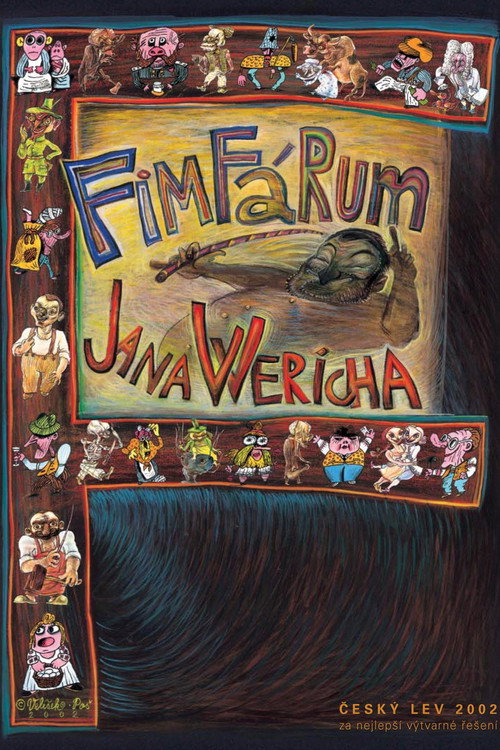
Jan Werich's Fimfarum
2002
No user ratings available yet
Representation score: 2.0 out of 10
Representation Score
Fair
2006
Director
Vlasta Pospíšilová, Aurel Klimt, Jan Balej, Břetislav Pojar
Runtime
90 minutes
Average Rating
No ratings yetNew Showbiz Analysis
Fimfárum 2 showcases the artistry of Czech animation while emphasizing traditional storytelling. The film leans heavily on established archetypes, reinforcing classical storytelling rather than challenging existing social or cultural norms. Ultimately, the work stands as a sophisticated cultural artifact of traditional tales. It lacks the intentionality needed to address contemporary, multi-layered, or progressive identity-driven narratives.
Category Breakdown
The film uses traditional folk stories set in a stylized, historical European setting. There is no indication of non-traditional gender identities or same-sex relationships within these classic tales.
The stories like Three Sisters and One Ring follow conventional gender roles. These vignettes emphasize interpersonal enchantment rather than challenging traditional gender roles or hierarchies.
The setting is primarily a localized European fantasy world. While one segment recreates a Middle Eastern atmosphere, it relies on traditional visual styles rather than diverse ethnic representation.
The film preserves traditional folklore and whimsical small-town life. It uses absurd folk humor as a stylistic choice rather than critiquing Western morality or institutions.
The Hunchbacks of Damascus references physical differences, but these characters lack modern ability to act. The representation relies on traditional, potentially stereotypical folkloric characterizations.
Present on Screen
Limited or Absent
Official Synopsis
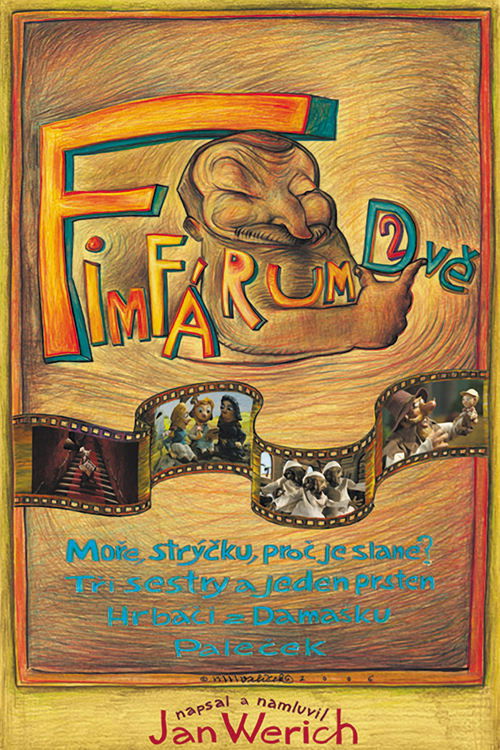
The sequel to the successful film Fimfárum by Jan Werich. Four brand new stories “for clever children and clever adults” from the popular book written by Jan Werich. Břetislav Pojar introduces the story of little Tom Thumb full of twists and adventure. Aurel Klimt brings to life three brothers, The Hunchbacks of Damascus, re-creating the atmosphere of the Middle East and variety of the oriental storytelling. Vlasta Pospíšilová’s Three Sisters and One Ring shows a rural Decameron-like manual on how to enchant one’s loved ones with a mere ring and Jan Balej lets his characters Marek and Kouba re-live an ancient fairy-tale about greed, devils and natural phenomena in his The Sea, Uncle, Why is it Salty?
2002
2006
1968
1998
1985
1970
1984
2005
No reviews yet. Be the first to share your thoughts on this movie!
Use the rating form above to leave a star rating and optional review.