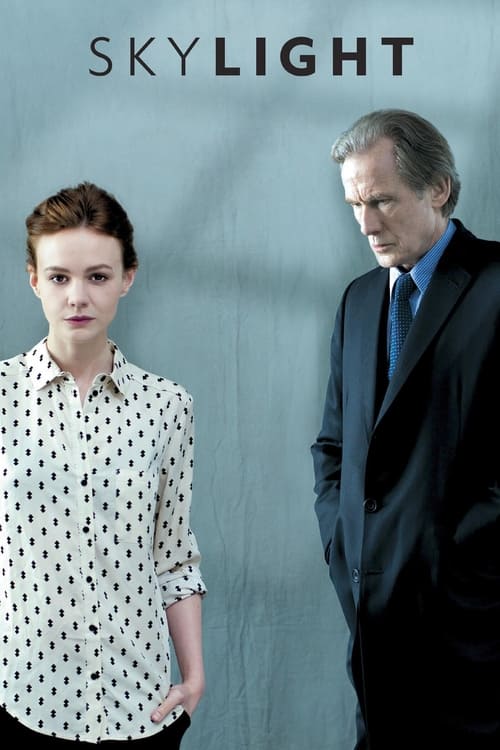
National Theatre Live: Skylight
2014
No user ratings available yet
Diversity score: 4.4 out of 10
2014
Director
Nick Wickham, Benedict Andrews
Runtime
174 minutes
Average Rating
No ratings yetSynopsis
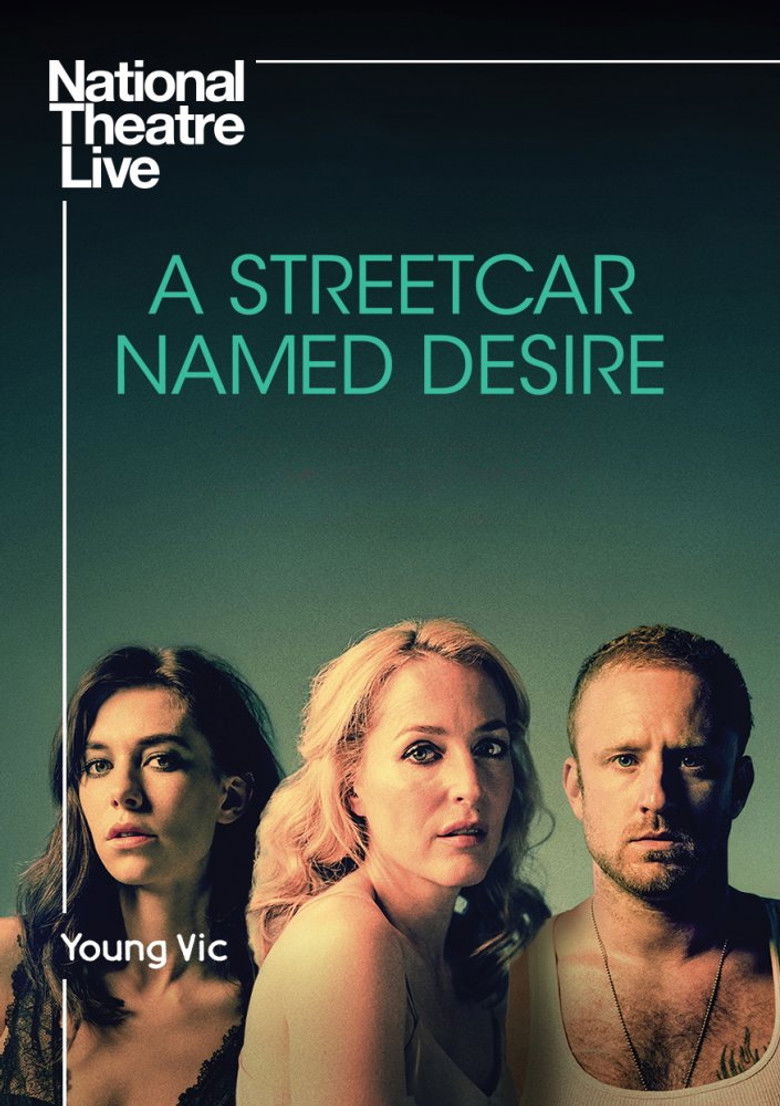
As Blanche’s fragile world crumbles, she turns to her sister Stella for solace – but her downward spiral brings her face to face with the brutal, unforgiving Stanley Kowalski.
Overall Score
Fair
Category Breakdown
LGBTQ+ Representation
The production lacks explicit LGBTQ+ characters or overt same-sex domesticity. Instead, it relies on subtextual cues and Blanche’s history of unconventional associations to explore themes of repressed sexuality.
Gender Representation
The film deconstructs traditional patriarchal authority by portraying Stanley’s dominance as volatile and predatory. Female characters challenge era-specific decorum, though their agency is often limited by systemic pressures.
Racial & Ethnic Diversity
The core cast is predominantly white, reflecting the mid-century New Orleans setting. The narrative focus remains centered on the internal dynamics of a white, class-stratified family.
Religious & Cultural Diversity
The production critiques traditional Western institutions and the decay of Southern social hierarchies. It portrays the domestic unit as a site of dysfunction rather than an idealized structure.
Disability Representation
Blanche DuBois’s psychological fragmentation serves as the central engine of the drama. The portrayal offers a nuanced, tragic look at mental decline without resorting to inspiration porn.
Strengths
Areas for Improvement
AI Analysis
This production of Tennessee Williams' classic functions as a sophisticated deconstruction of social and gendered norms. It succeeds by interrogating systemic decay and the subjectivity of truth rather than relying on demographic variety. The strength of the work lies in its thematic depth, particularly regarding mental health and the subversion of patriarchal hierarchies. It uses character psychology to challenge established social structures. However, the film is limited by its historical adherence to a predominantly white cast and a lack of explicit LGBTQ+ identity markers. These factors prevent a higher score in demographic representation.
2014

2018

2015
2015

2017

2017
2014

2017

2010
2019
2004
2015
No reviews yet. Be the first to share your thoughts on this movie!
Use the rating form above to leave a star rating and optional review.