The B-Side: Elsa Dorfman's Portrait Photography
2017
No user ratings available yet
Representation score: 6.7 out of 10
Representation Score
Fair
2018
Director
Kareem Tabsch, Dennis Scholl
Runtime
70 minutes
Average Rating
No ratings yetNew Showbiz Analysis
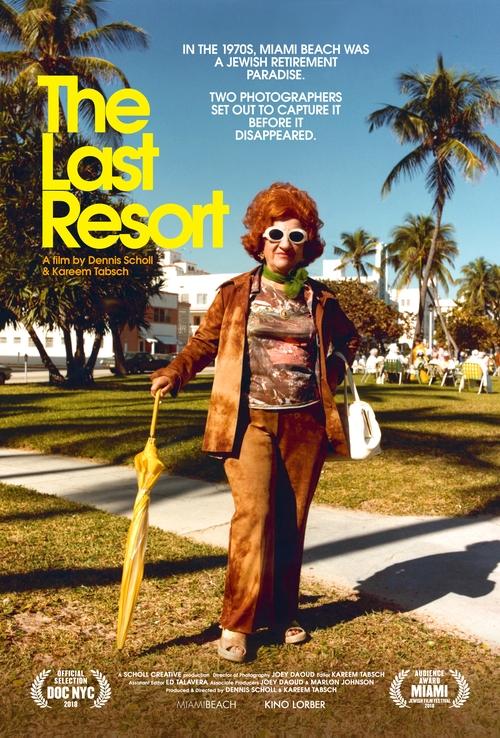
The Last Resort succeeds as a sociological study by centering a niche, identity-driven community of Jewish retirees in 1970s Miami Beach. Using the lens of photographers Andy Sweet and Gary Monroe, the film avoids homogenized depictions of American life, opting for cultural specificity. However, the film's perspective is heavily influenced by a male gaze, as the primary narrative drivers are the two male photographers. While the environment suggests a period of social fluidity and queer visibility, the film lacks explicit, character-driven LGBTQ+ storylines. Ultimately, the documentary provides a nuanced portrait of a specific ethnic enclave, capturing the vibrant, non-conformist social dynamics of 1970s Miami Beach.
Category Breakdown
The film captures the free-spirited atmosphere of 1970s Miami Beach, known for its significance in queer history. However, the narrative does not feature prominent LGBTQ+ character arcs, despite the era's context.
The documentary focuses on the male perspectives of photographers Andy Sweet and Gary Monroe. While the subjects are diverse, the story is primarily driven by men rather than women.
The film offers a detailed look at the Jewish retiree community, adding depth to ethnic identity. This focus challenges the typical Anglo-Saxon depiction of American life by highlighting a specific diaspora.
By focusing on a niche subculture, the film emphasizes communal identity and specific cultural lifestyles. It portrays a community living on the periphery of mainstream American social norms.
There is no significant evidence regarding the portrayal of physical or neurodivergent disabilities within the film.
Present on Screen
Limited or Absent
Official Synopsis
An uncannily revealing portrait of American photographers Andy Sweet and Gary Monroe and the vibrant community of Jewish retirees they obsessively focused their camera's lens on in the sunburned paradise of 1970s Miami Beach.
2017
1978

2013

2014
2013

2000

2015
2017
No reviews yet. Be the first to share your thoughts on this movie!
Use the rating form above to leave a star rating and optional review.