Strange Bedfellows
1965
No user ratings available yet
Representation score: 1.7 out of 10
Representation Score
Minimal
1952
PGDirector
Edmund Goulding
Runtime
86 minutes
Average Rating
No ratings yetNew Showbiz Analysis
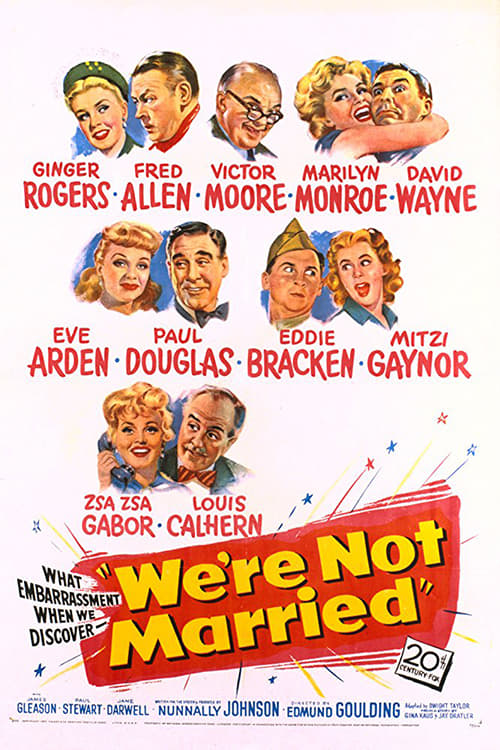
We're Not Married! is a quintessential product of the Golden Age studio system. The plot hinges on a comedic legal technicality to explore the sanctity of marriage, a cornerstone of mid-century social stability. The film operates strictly within the established social and moral frameworks of 1952. It prioritizes preserving traditional social contracts over any form of systemic critique or progressive identity exploration. Ultimately, the production lacks representation of multiple aspects of diversity. It functions as a conventional romantic comedy that upholds the status quo of its era.
Category Breakdown
The film focuses on five couples dealing with marital legalities, reinforcing traditional heterosexual norms. There is no indication of non-traditional gender identities or critiques of conventional norms.
The story centers around the validity of marriage, a concept rooted in mid-20th century domestic life. The narrative likely follows conventional gender roles typical of 1950s romantic comedies.
The synopsis does not mention a diverse cast or non-Anglo-Saxon characters, suggesting a homogeneous depiction typical of 1952 Hollywood productions.
The plot emphasizes the importance of traditional Western institutions like marriage. It focuses on resolving legal issues rather than critiquing social or religious frameworks.
There is no evidence of characters with visible or invisible disabilities within the narrative.
Present on Screen
Limited or Absent
Official Synopsis
A Justice of the Peace performed weddings a few days before his license was valid. A few years later five couples learn they have never been legally married.
1965

1941
1941
1963
1967

1938
1965

1952
No reviews yet. Be the first to share your thoughts on this movie!
Use the rating form above to leave a star rating and optional review.