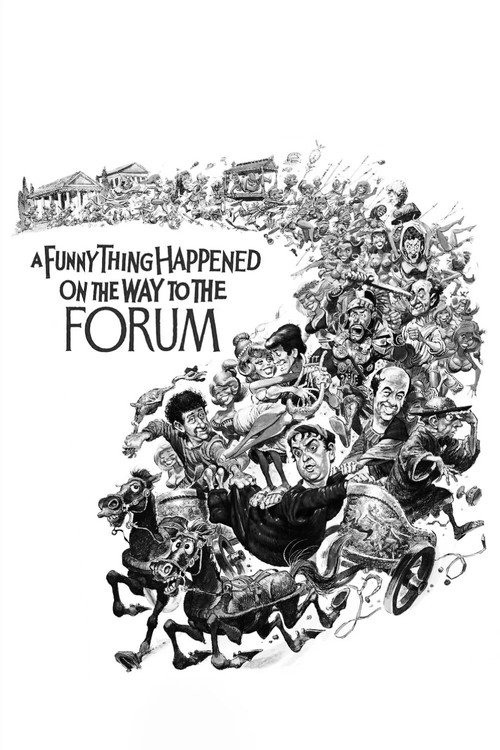
A Funny Thing Happened on the Way to the Forum
1966
No user ratings available yet
Representation score: 2.3 out of 10
No Poster Available
Representation Score
Minimal
1936
ApprovedDirector
Reginald Le Borg
Runtime
19 minutes
Average Rating
No ratings yetNew Showbiz Analysis
No Place like Rome is a product of the 1930s studio system, prioritizing genre-driven escapism and traditional narrative structures. The film leans heavily on established social hierarchies, particularly through the romantic dynamic between a Roman bachelor and a slave girl. The production relies on historical shorthand and stock footage to build its world, reinforcing a Western-centric view of antiquity. This approach favors standard romantic clichés over any meaningful social or cultural critique. Ultimately, the film functions as a lighthearted musical comedy that maintains the status quo of its era, offering little in the way of diverse representation or institutional critique.
Category Breakdown
The film follows a conventional romantic storyline between a Roman bachelor and a slave girl. It lacks identities or narratives that challenge assumptions about gender and sexuality.
The story relies on established social hierarchies, featuring a Roman bachelor and a lovely slave girl. Women do not exercise significant control or subvert the male-dominated leadership.
Set in Ancient Rome, the film likely uses a homogeneous casting approach typical of the 1930s. It lacks evidence of casting actors with diverse backgrounds or multi-layered depth.
As a musical comedy, the film prioritizes escapism over critical examination of societal structures. The narrative centers on individual romantic fulfillment within a traditional historical context.
There is no documented evidence regarding the inclusion or portrayal of characters with visible or invisible disabilities.
Present on Screen
Limited or Absent
Official Synopsis
This ancient history musical comedy predates A Funny Thing Happened on the Way to the Forum by a few decades. Frank Albertson plays a happy Roman bachelor who falls for a lovely slave girl, in a silly tale that uses stock footage from MGM's silent Ben Hur.
1966

1964
1971
1994
1933
1934
1960
1955
No reviews yet. Be the first to share your thoughts on this movie!
Use the rating form above to leave a star rating and optional review.