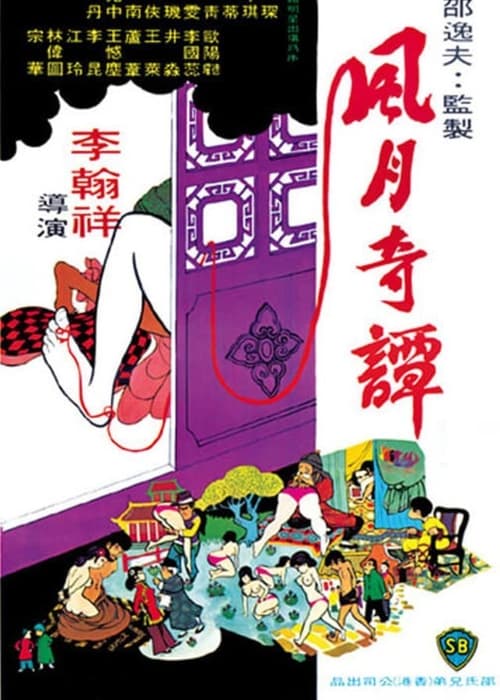
Legends of Lust
1972
No user ratings available yet
Representation score: 5.0 out of 10
Representation Score
Fair
1976
Director
Li Han-Hsiang
Runtime
86 minutes
Average Rating
No ratings yetNew Showbiz Analysis
Li Han-Hsiang uses the erotica genre to explore the breakdown of conventional domestic life and the complexities of human desire. The film's two-part structure transitions from traditional settings to more contemporary explorations of social norms. While the film challenges traditional marital stability, it remains grounded in the specific cultural and heterosexual frameworks of 1970s Hong Kong cinema. It lacks diverse racial representation or storytelling that reflects multiple aspects of identity. Ultimately, the work serves as a cultural artifact that examines human impulses and social transgressions, rather than offering a broad range of identity representation.
Category Breakdown
The film centers on themes of infidelity and marital dissatisfaction within a heterosexual context. It does not include any same-sex relationships or non-binary gender identities.
The story disrupts traditional family dynamics by focusing on a dissatisfied wife and exploring female desire. It challenges the typical household hierarchy through themes of lust and infidelity.
As a Shaw Brothers production, the film is specific to a Chinese cultural context. It lacks multi-ethnic casting, reflecting the regional focus of its time period.
The narrative explores moral relativism through themes of sex and social transgression. It moves beyond rigid traditions to examine complex human impulses.
Disability is not a theme or character element in this work.
Present on Screen
Limited or Absent
Official Synopsis
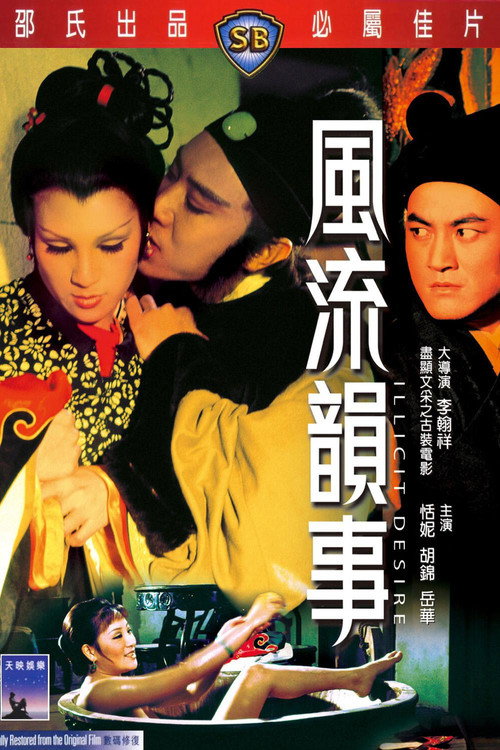
Shaw Brothers superdirector Li Han-Hsiang was particularly masterful in two genres: erotica and classic Chinese tales. He combined these two loves in this two-part examination of lust. The first story features an elderly jeweler's adventures with his unsatisfied wife, a handsome neighbor, and the neighborhood bordello. The second is a more modern tale of sex, lies, and videotape.
1972

2017
1975
1975
1977
1978
1979
1973
No reviews yet. Be the first to share your thoughts on this movie!
Use the rating form above to leave a star rating and optional review.