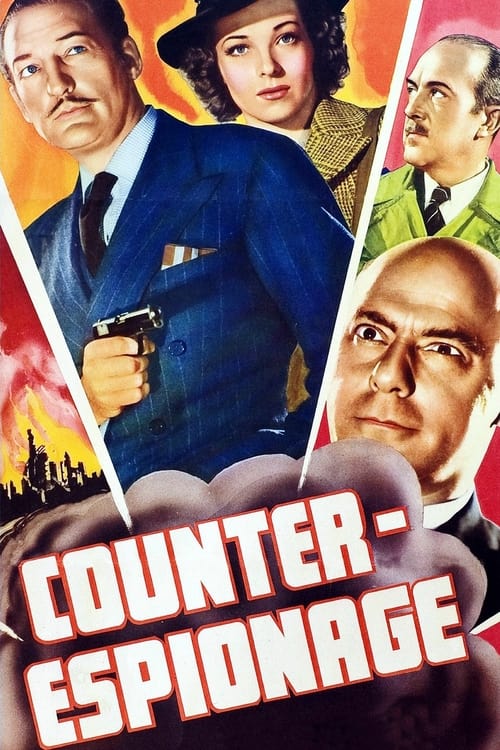
Counter-Espionage
1942
No user ratings available yet
Representation score: 0.4 out of 10

Representation Score
Minimal
1943
NRDirector
Karel Lamač
Runtime
91 minutes
Average Rating
No ratings yetNew Showbiz Analysis
This wartime thriller reflects the social and cinematic norms of the early 1940s. It relies on established espionage clichés and traditional moral binaries, such as the tension between personal freedom and military law. The film lacks depth in representing various identities and focuses on a conventional conflict between a Royal Navy commander and a Nazi-aligned deceiver. It reinforces mid-century gender dynamics through the femme fatale archetype.
Category Breakdown
The film focuses on a traditional romantic and adversarial relationship between a male commander and a female antagonist. There are no characters with non-binary gender identities or sexual orientations.
The narrative uses the femme fatale archetype, where women use deception to drive the plot. This aligns with mid-century gender clichés.
The story follows the homogeneous casting norms of the 1940s. There are no racially diverse characters or actors from non-Anglo-Saxon backgrounds.
The plot emphasizes traditional Western values of duty, patriotism, and military justice. It focuses on institutional loyalty without challenging social systems.
There is no information available regarding the depiction of physical or neurodivergent characters in this production.
Present on Screen
Limited or Absent
Official Synopsis
A Royal navy Commander is tricked by a pretty girl who is working for the Nazis. She tricks him into revealing some military secrets and he is court martial. He vows to track her and her accomplices down.
1942

1952
1944
1935
1946
1946
1943
1941
No reviews yet. Be the first to share your thoughts on this movie!
Use the rating form above to leave a star rating and optional review.