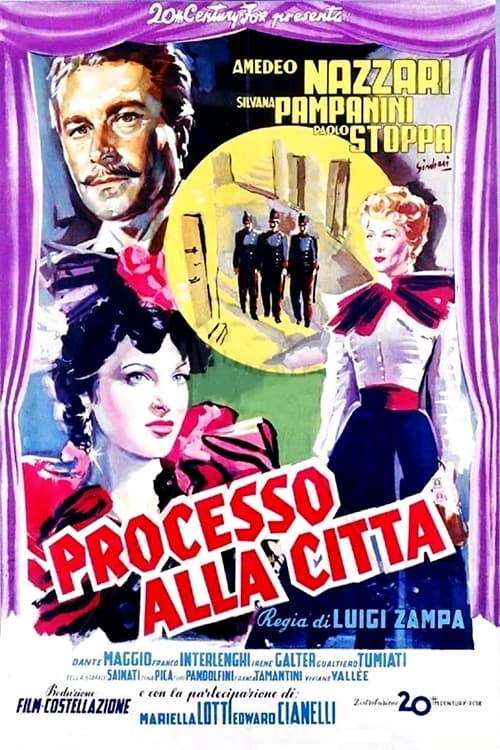
The City Stands Trial
1952
No user ratings available yet
Representation score: 1.5 out of 10
Representation Score
Minimal
1995
Director
Michele Placido
Runtime
91 minutes
Average Rating
No ratings yetNew Showbiz Analysis
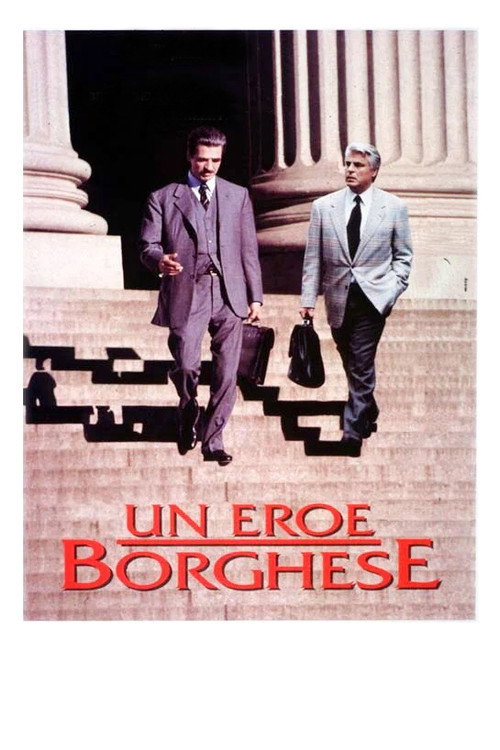
Un eroe borghese is a historical drama that prioritizes systemic critique over demographic diversity. It focuses on institutional power and the friction between individual integrity and state corruption. While the film lacks representation regarding LGBTQ+, race, or gender parity, it provides a sophisticated look at traditional power structures. The narrative centers on a protagonist whose strength lies in bureaucratic duty rather than physical dominance. Ultimately, the film’s value lies in its exploration of institutional failure, challenging the legitimacy of state and capitalistic hierarchies, while remaining visually and socially homogeneous.
Category Breakdown
The film focuses on male-dominated spheres of Italian law and finance. There are no LGBTQ+ characters or narratives addressing non-straight relationships.
The plot is driven primarily by male figures in law, finance, and policing. Women appear in familial or political contexts but largely occupy traditional roles within the 1970s hierarchy.
The cast and setting are overwhelmingly homogeneous, reflecting the specific socio-political landscape of 1970s Italy. The film does not utilize diverse casting to challenge the era's demographic reality.
The film excels in critiquing Western institutions, portraying the state and capitalist structures as corrupt. It frames the establishment as a source of systemic malpractice and moral instability.
There are no prominent depictions of visible or invisible disabilities that drive the narrative or serve as central character arcs.
Present on Screen
Limited or Absent
Official Synopsis
1979. Lawyer Giorgio Ambrosoli is appointed liquidator of Banca Privata Italiana, the empire of mighty financier Michele Sindona. Teaming up with unassuming cop Silvio Novembre, Ambrosoli uncovers the real scope of Sindona's malpractice, exposing him as the middleman in a global network linking the Sicilian Mafia, Italy's ruling Christian Democrats, and CIA-backed covert operations across Western Europe. Isolated by his own government and pressured by mob hitmen, Ambrosoli refuses to back down, insisting he is simply 'doing his duty'.
1952
2000
2022

2003
2022
1977
1986

2020
No reviews yet. Be the first to share your thoughts on this movie!
Use the rating form above to leave a star rating and optional review.