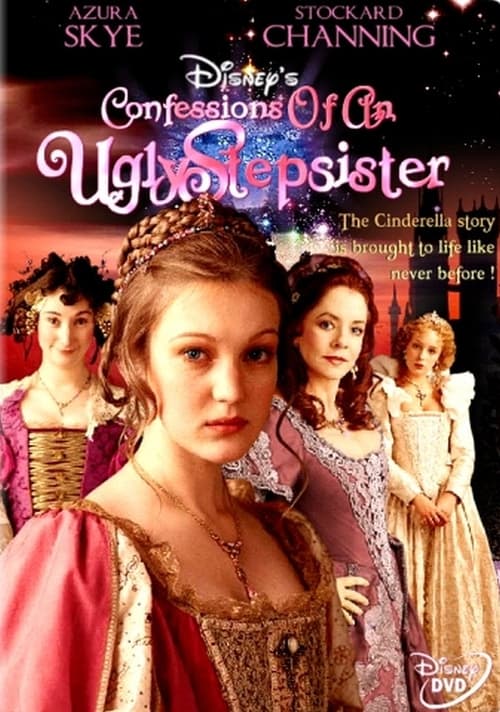
Confessions of an Ugly Stepsister
2002
No user ratings available yet
Representation score: 7.3 out of 10

Representation Score
Good
2025
NRDirector
Emilie Blichfeldt
Runtime
109 minutes
Average Rating
No ratings yetNew Showbiz Analysis
The Ugly Stepsister weaponizes fairy-tale clichés to expose the harsh economics of beauty and patriarchal marriage markets. Its strongest achievement lies in dismantling passive femininity, granting its female leads ruthless ability to act and strategic depth. The narrative treats physical transformation as a visceral metaphor for societal pressure rather than mere spectacle. Conversely, the film operates within a rigidly homogeneous framework. It enforces conventions that assume everyone is straight or cisgender and maintains a Eurocentric casting pool without attempting to introduce diverse perspectives. Disability remains entirely absent, reducing the story’s progressive potential to a narrow gender critique. Ultimately, the work functions as a sharp, post-feminist satire that excels in cultural subversion while neglecting broader representation. Its impact relies heavily on stylistic bravado rather than comprehensive inclusivity.
Category Breakdown
The film strictly adheres to the assumption that everyone is straight or cisgender, presenting marriage as the only route to social advancement. The royal ball focuses on noble virgins, aiming for a traditional prince-bride pairing, and does not include any space for queer identities or alternative relationship structures.
The movie shifts the Cinderella myth to highlight women's ability to drive the story, treating marriage as a financial transaction rather than a romantic ideal. Women navigate a patriarchal economy where beauty is a systemic burden, turning desperation into strategic survival.
The casting reflects a predominantly Scandinavian ensemble typical of Nordic independent cinema norms. The narrative maintains a Eurocentric perspective, relying on a historically white fairy-tale archetype without introducing cross-cultural dynamics or diverse perspectives.
Satirical body horror visually represents societal pressure, critiquing the commodification of female aesthetics and patriarchal marriage markets. The story aligns with post-feminist revisionism, framing ruthless ambition as a rational response to oppressive economic structures.
The film entirely omits visible or invisible disabilities, neurodivergence, and chronic illness from its narrative framework. Physical transformation themes focus exclusively on beauty standards, leaving disabled experiences and accessibility concerns completely unaddressed.
Present on Screen
Limited or Absent
Official Synopsis
In a fairy-tale kingdom where beauty is a brutal business, Elvira battles to compete with her incredibly beautiful stepsister, Agnes, and she will go to any length to catch the Prince’s eye.
2002
1997

2010
2006
2024
2020
2019
2021
No reviews yet. Be the first to share your thoughts on this movie!
Use the rating form above to leave a star rating and optional review.