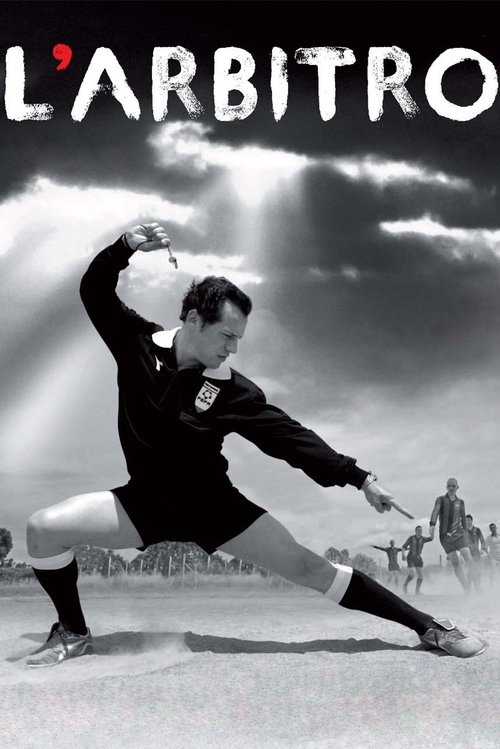
The Referee
2013
No user ratings available yet
Representation score: 2.7 out of 10

Representation Score
Fair
2009
Director
Luigi Sardiello
Average Rating
No ratings yetNew Showbiz Analysis
Piede di Dio is a localized character study that leans heavily into traditional Italian comedic and sporting clichés. While it delves deeply into the neurodivergent experience of its protagonist, the broader social landscape remains quite narrow. The film excels at grounding its story in a specific cultural moment, using the 2006 World Cup and Italian soccer scandals to build authenticity. However, it operates within very conventional social frameworks. Ultimately, the narrative lacks the systemic disruption or diverse casting necessary to move beyond a traditional, regional perspective. It is a focused study of talent and aspiration rather than a broad social critique.
Category Breakdown
The film does not include explicit representations of LGBTQ+ characters or non-assuming gender matches what was assigned at birth identities. The story focuses solely on the professional relationship between a talent scout and a young athlete.
The story centers around a male-dominated soccer environment. It highlights the emotional vulnerability of the male protagonist but does not feature strong female characters or challenge traditional gender hierarchies.
Set in a remote Sicilian village, the film reflects a localized, homogeneous Mediterranean population. There is no indication of a diverse or non-white cast that would disrupt regional norms.
The film is rooted in Italian socio-political history, particularly the 2006 World Cup and the Moggi scandal. It celebrates national identity and meritocracy without critiquing Western institutions.
The protagonist, Elia, exhibits significant neurodivergence, having the mental capacity of a 12-year-old at age 18. This provides a central focus on cognitive differences.
Present on Screen
Limited or Absent
Official Synopsis
Elia plays soccer on the beach and on the dirt fields of a remote village in Sicily, where one day Michele, a talent scout for Serie A, arrives. His target should be some boys from the local soccer school who are shown and recommended to him through more or less legitimate means, but his attention is immediately captured by the innate skill of 18-year-old Elia, who has the mind of a 12-year-old. It is the summer of 2006 when the two meet; Italian soccer is on one hand shaken by the Moggi scandal, and on the other hand exalted by the victory at the World Cup in Germany. The boy’s life could be ready for a change, but so could Michele’s, who despite his professional appearance, is not doing very well.
2013
1984
2006
1997
2008
2005
2012

2025
No reviews yet. Be the first to share your thoughts on this movie!
Use the rating form above to leave a star rating and optional review.