
No Other Land
2024
No user ratings available yet
Representation score: 6.5 out of 10
Representation Score
Good
2003
Director
Hany Abu-Assad
Runtime
80 minutes
Average Rating
No ratings yetNew Showbiz Analysis
Hany Abu-Assad’s documentary uses the everyday mechanics of a Ford Transit to critique systemic geopolitical structures. By framing movement as a series of obstacles, the film turns a common vehicle into a microcosm of a population navigating restricted mobility. The film's strength lies in its polyphonic structure, prioritizing the role of Palestinian civilians over institutional narratives. It successfully avoids the 'outsider looking in' cliché, offering an internal perspective on the intersection of ethnicity and state power. While the film excels in cultural and ethnic representation, it lacks specific focus on LGBTQ+ identities or explicit disability narratives. It functions primarily as a study of territoriality and the lived experience of a underrepresented population.
Category Breakdown
The documentary focuses on the socio-political realities of the West Bank. There are no LGBTQ+ characters or narratives addressing non-straight relationships.
The film captures diverse voices across various social levels within a high-stress environment. While it avoids stereotypical gender roles, it does not explicitly challenge traditional gender hierarchies.
The film excels by centering Palestinian identity and the complexities of living under occupation. It provides an authentic, internal perspective that avoids the 'outsider looking in' cliché.
This work serves as a significant critique of colonial power dynamics. It highlights the tension between civilians and military authority to challenge established power structures.
The film does not focus on specific physical or neurodivergent disabilities. However, the psychological impact of constant surveillance and systemic confinement is evident throughout the work.
Present on Screen
Limited or Absent
Official Synopsis
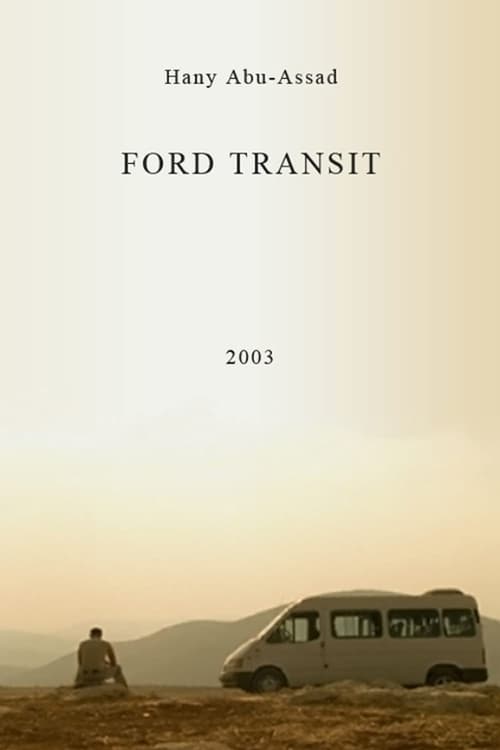
The movie follows Rajai, a Ford Transit driver which is the most popular transportation in the Palestinian occupied territories (occupied by Israel). While taking a ride with Rajai, we experience the frustrating situation the Palestinian need to deal with. On our trips from the roadblock in Ramallah to the roadblock in Jerusalem, we get to hear analysis of the situation by all kinds of random transporters, people from different religions, origins, and levels of class.
2024

2011
2003
2002

1991

2023
1982
2004
No reviews yet. Be the first to share your thoughts on this movie!
Use the rating form above to leave a star rating and optional review.