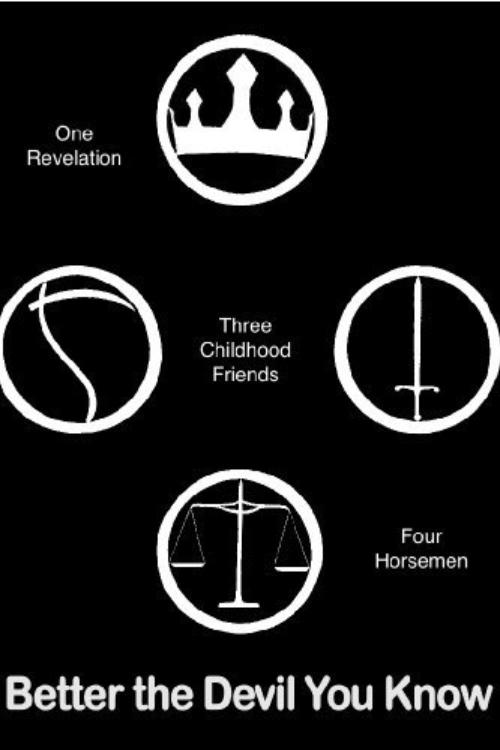
Better the Devil You Know
2009
No user ratings available yet
Representation score: 3.2 out of 10

Representation Score
Fair
2004
Director
David Slade
Runtime
11 minutes
Average Rating
No ratings yetNew Showbiz Analysis
Do Geese See God is a character-driven study of subjective reality that prioritizes psychological depth over demographic breadth. While the film lacks representation for LGBTQ+ individuals and diverse racial groups, it succeeds in deconstructing how institutions define truth. The narrative excels by centering neurodivergent experiences, treating mental health as a complex exploration of perception rather than a mere plot device. It challenges the dominance of organized religion and parental authority through the protagonist's internal journey. Ultimately, the film's impact comes from its intellectual engagement with moral relativism, even as it remains tied to traditional Western social structures and homogeneous casting.
Category Breakdown
The film does not include any LGBTQ+ characters or themes. The story focuses entirely on the protagonist's spiritual and psychological journey within a traditional social framework.
Gender roles follow conventional patterns within a middle-class family setting. The narrative centers on parental protection and traditional family structures without challenging gender hierarchies.
The cast appears largely homogeneous, lacking diverse racial representation. The film operates within a narrow demographic scope reflecting a traditional Western social baseline.
The film critiques institutional authority by contrasting subjective truth against organized religion. It explores how traditional Western institutions may struggle to accommodate individual non-conformity.
The story provides a nuanced look at neurodivergence and mental health. It examines the tension between perceived madness and divinity, giving the protagonist control over his reality.
Present on Screen
Limited or Absent
Official Synopsis
A sweating man breathes rapidly from exertion as he open a packet and pulls out a DVD with the words "Salvation comes from within" on it. Impatiently he plays the film, which appears to be a Max Fleischer cartoon of the three blind mice singing. Soon, the mice deliver a message, telling the man to go to a specific street corner. Off he runs, through modern Los Angeles crowds. At the designated corner, a street person talks to him about shoes, then a cell phone rings, which he finds and answers. A voice sends him running - to avert a tragedy, to find salvation, or because he's trapped in earthly pursuits? Is this cosmic cat and mouse? Will he stop to smell the roses?
2009
2004

2021

2009

2012

2009

2002

1974
No reviews yet. Be the first to share your thoughts on this movie!
Use the rating form above to leave a star rating and optional review.