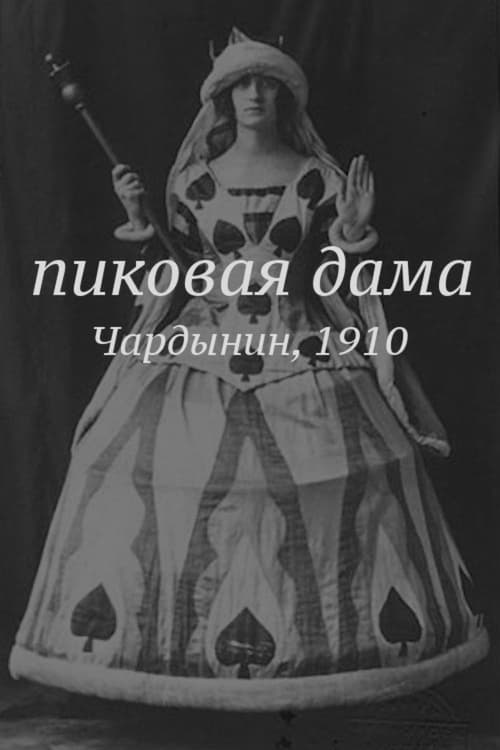
The Queen of Spades
1910
No user ratings available yet
Representation score: 0.6 out of 10

Representation Score
Minimal
1916
Director
Yakov Protazanov
Runtime
63 minutes
Average Rating
No ratings yetNew Showbiz Analysis
The Queen of Spades is a period-accurate psychological drama that emphasizes individual obsession over social inclusion. It adheres closely to the traditional social and gender hierarchies of its time. The narrative centers on the protagonist's moral collapse, using themes of madness and fate as cautionary tales. This focus on classical tragedy means the film does not address systemic power dynamics or diverse social perspectives. Ultimately, the film studies individual pathology rather than serving as a platform for social representation.
Category Breakdown
The film reflects the straight-centered social structures of 19th-century Russian aristocracy, with no indication of LGBTQ+ relationships or non-binary gender identities.
Female characters such as Lizaveta primarily serve as conduits for male ambition. The Countess holds power based on her age and class status, reinforcing traditional gender roles.
The film depicts a homogeneous Russian aristocratic society without examples of racial blending or diverse casting choices.
The story delves into themes of fate and the supernatural through a fatalistic lens, deeply rooted in the cultural traditions of the Russian aristocracy.
Characters with mental health issues are portrayed as signs of moral decay, lacking nuanced or empowering storylines.
Present on Screen
Limited or Absent
Official Synopsis
While hosting a game of cards one night, Narumov tells his friends a story about his grandmother, a Countess. As a young woman, she had once incurred an enormous gambling debt, which she was able to erase by learning a secret that guaranteed that she could win by playing her cards in a certain order. One of Narumov's friends, German, has never gambled, but he is intrigued by the story about the Countess and her secret. He soon becomes obsessed with learning this secret from her, and he starts by courting her young ward Lizaveta, hoping to use her to gain access to the Countess.
1910
1949
1907
1982
1945

1926
No reviews yet. Be the first to share your thoughts on this movie!
Use the rating form above to leave a star rating and optional review.