
Pane e libertà
2009
No user ratings available yet
Diversity score: 5.5 out of 10
1997
GDirector
John Frankenheimer
Runtime
178 minutes
Average Rating
No ratings yetSynopsis
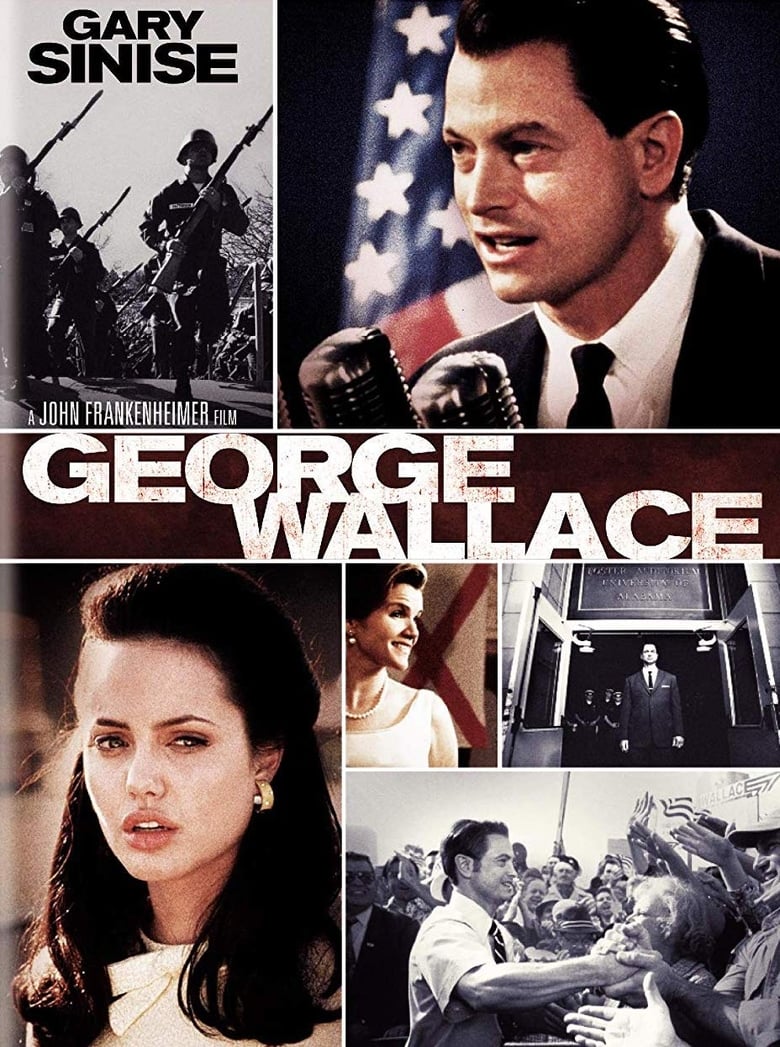
George Wallace is a 1997 television film starring Gary Sinise as George Wallace, the former Governor of Alabama. It was directed by John Frankenheimer, who won an Emmy award for it; Sinise and Mare Winningham also won Emmies for their performances. The film was based on the 1996 biography Wallace : The Classic Portrait of Alabama Governor George Wallace by Marshall Frady, who also co-wrote the teleplay. Frankenheimer's film was highly praised by critics: in addition to the Emmy awards, it received the Golden Globe for Best Miniseries/Motion Picture made for TV. Angelina Jolie also received a Golden Globe for her performance as Wallace's second wife, Cornelia.
Overall Score
Fair
Category Breakdown
LGBTQ+ Representation
The film focuses strictly on the heteronormative political and domestic structures of the mid-20th-century American South. No LGBTQ+ characters or non-cisnormative identities are explored within this historical scope.
Gender Representation
Cornelia Wallace is portrayed with significant emotional depth as a vital pillar in her husband's life. However, her role largely operates within the conventional framework of a political spouse.
Racial & Ethnic Diversity
The narrative incorporates the agency of Black activists who challenge segregationist policies. It avoids a sanitized history by highlighting the friction between white institutions and marginalized groups.
Religious & Cultural Diversity
The film deconstructs Southern tradition by portraying the protagonist's shift from a staunch segregationist to a moderate figure. It critiques the systemic oppression inherent in the era's social structures.
Disability Representation
The film depicts the physical aftermath of the 1972 assassination attempt. However, it focuses on political implications rather than exploring disability through a lens of agency.
Strengths
Areas for Improvement
AI Analysis
George Wallace serves as a complex historical deconstruction rather than a standard hagiography. It earns credit by documenting the friction between systemic oppression and the civil rights movement, refusing to endorse the era's traditional hierarchies. The film's strength lies in its refusal to sanitize the racial tensions of the Civil Rights era. By centering the conflict between segregationist power and Black activists, it provides a nuanced look at historical accountability. However, the film remains limited by its period setting. It lacks representation for LGBTQ+ identities and treats physical disability primarily as a political plot point rather than a lived experience.
2009

2021

2015

1983
1994
No reviews yet. Be the first to share your thoughts on this movie!
Use the rating form above to leave a star rating and optional review.