Zhou Yu's Train
2002
No user ratings available yet
Diversity score: 5.8 out of 10
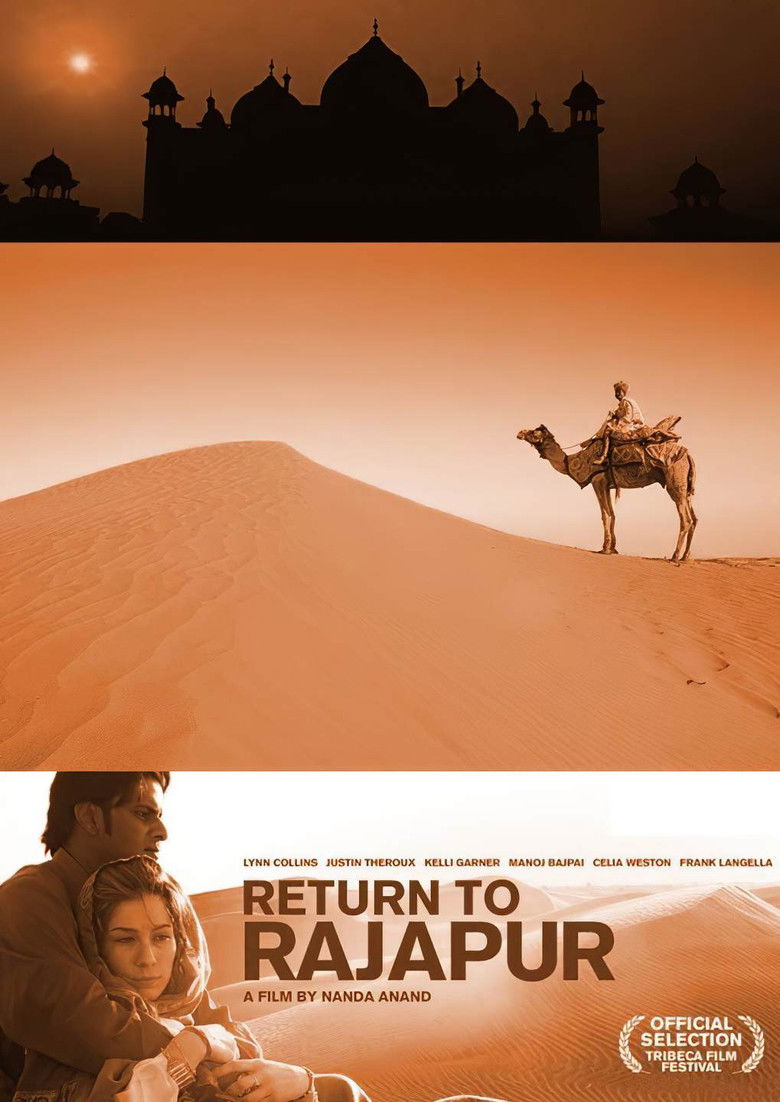
2006
Director
Nanda Anand
Runtime
97 minutes
Average Rating
No ratings yetSynopsis
A doomed love affair blooms against the beautiful and exotic backdrop of the deserts of India in this romantic drama. Samantha Hartley (Kelli Garner) is a woman in her early twenties who travels to Rajapur in India to visit a resort where her mother stayed years ago. While tracing the steps of her mother, Sara (Lynn Collins), Samantha learns the true story about her mother's stormy marriage to Jeremy (Justin Theroux), a charming but moody alcoholic. Only a few days after their wedding, Sara began to wonder if marrying Jeremy was a mistake, and while visiting India on their honeymoon, Sara met Jai Singh (Manoj Bajpai), a handsome and sensitive widower living in Rajapur. Jai Singh, who speaks fluent English, soon strikes up a friendship with Sara that quickly grows into a romance, but both are aware of the transgressive nature of their love, and their affair takes a tragic turn, leaving its scars on all parties involved.
Overall Score
Fair
Category Breakdown
LGBTQ+ Representation
The story centers on a heteronormative romantic triangle. While the romance is described as transgressive, the conflict stems from cultural and marital boundaries rather than sexual orientation.
Gender Representation
Sara demonstrates agency by questioning her marriage and seeking emotional connection. However, the plot follows a conventional structure centered on a female protagonist's romantic interests.
Racial & Ethnic Diversity
The film moves beyond an Anglo-Saxon lens by centering its emotional core in India. The casting of Manoj Bajpai alongside Western leads facilitates a meaningful cultural blend.
Religious & Cultural Diversity
By using a non-Western setting, the film explores the friction between individual desire and social expectations. It avoids idealized romance in favor of complex, situational human connections.
Disability Representation
No central character arcs focus on disability. Jeremy’s alcoholism is mentioned, but it serves as a personality trait rather than a primary study of addiction or disability agency.
Strengths
Areas for Improvement
AI Analysis
Return to Rajapur succeeds in disrupting the standard Western-centric romantic drama by grounding its narrative in the Indian desert. The cross-cultural connection between Sara and Jai Singh provides a sophisticated look at how individual desires clash with social structures. While the film offers nuanced female agency and integrates diverse perspectives through its casting, it remains tethered to traditional romantic tropes. The narrative focus stays largely within the bounds of heteronormative relationship dynamics. Ultimately, the film's strength lies in its refusal to provide a moralistic, idealized view of romance, opting instead to explore the lasting scars of transgressive love across cultural lines.
2002

2021

2016

2010
2007

2011

2007

2020

2009

2020

2013

2000
No reviews yet. Be the first to share your thoughts on this movie!
Use the rating form above to leave a star rating and optional review.