
A Place of One's Own
1945
No user ratings available yet
Representation score: 3.4 out of 10
Representation Score
Fair
1952
NRDirector
William Spier
Runtime
87 minutes
Average Rating
No ratings yetNew Showbiz Analysis
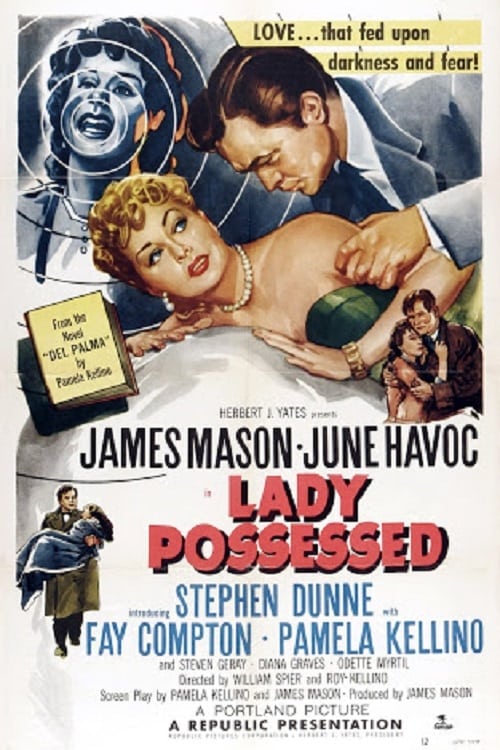
Lady Possessed is set in the early 1950s and reflects the demographic homogeneity of the era. It lacks diverse racial, ethnic, or LGBTQ+ representation, focusing on a white, straight-centered cast within a traditional social context. The film gains depth by delving into psychological complexity. It moves away from idealized domesticity by highlighting female instability and the erosion of marital stability. This offers a sophisticated look at moral ambiguity and the breakdown of traditional family units. Overall, the film's strength lies in its narrative structure rather than demographic representation. It uses psychological distress as a suspense tool without fully exploring authentic disability experiences.
Category Breakdown
The film follows strict 1950s conventions where everyone is assumed to be straight and cisgender. There is no depiction of same-sex relationships or non-cisgender identities.
The film challenges the 'stable housewife' stereotype by showing the female protagonist's psychological instability and obsessive desires. However, the main conflict still revolves around traditional romantic relationships.
The film features a mostly white, Anglo-Saxon cast. The setting and social environment are portrayed as homogeneous, reflecting the casting practices of the time.
The film explores moral relativism by presenting obsession as a psychological issue rather than a moral failing. It does not provide a critical examination of religion or capitalism.
Mental health issues and psychological fragmentation are used primarily to create suspense. The film does not offer a detailed exploration of neurodivergence or mental health experiences.
Present on Screen
Limited or Absent
Official Synopsis
A pianist takes his ailing wife out of a London hospital at the same time that another female patient there has suffered a miscarriage. Afterwards, the second woman feels empty and withdrawn, and, thinking that getting her away from London will help, her husband takes her to live at a country estate, which turns out to be the former residence of the pianist who left after his wife died. The woman begins to get visions of the wife and her final days; is she becoming possessed by the dead wife of the pianist?
1945
1944

1933

1961

1948
1977
1973
1928
No reviews yet. Be the first to share your thoughts on this movie!
Use the rating form above to leave a star rating and optional review.