
Lasciami Per Sempre
2017
No user ratings available yet
Representation score: 4.9 out of 10
Representation Score
Fair
2004
Director
Paolo Sorrentino
Runtime
135 minutes
Average Rating
No ratings yetNew Showbiz Analysis
Paolo Sorrentino's work is a character-driven exploration that challenges the stability of traditional social roles. By focusing on emotional volatility and existential aimlessness, the film disrupts the expectation of a cohesive, stable family unit. While the film does not emphasize demographic diversity or identity politics, it successfully explores the fluidity of social roles. It replaces rigid archetypes with a nuanced look at human imperfection. Ultimately, the film's strength lies in its subversion of domestic sanctity, though it remains confined to a homogeneous Mediterranean setting.
Category Breakdown
The film focuses on domestic tensions and romantic disappointment within a traditional Mediterranean family. It doesn't include explicit stories or characters that challenge the idea that everyone is straight or cisgender.
The story shifts attention from a patriarchal structure to emotional experiences. Although Peppino holds a traditional position, his unpredictable behavior weakens the idea of a stable male leader.
Set in Naples, the film showcases a culturally specific Mediterranean environment. The cast reflects the local demographics, emphasizing an ethnic homogeneity consistent with the setting.
The film questions traditional Western institutions by focusing on family dysfunction. It avoids idealized Christian morality, instead embracing moral ambiguity and existential wandering.
There is no indication of characters with physical or neurodivergent disabilities.
Present on Screen
Limited or Absent
Official Synopsis
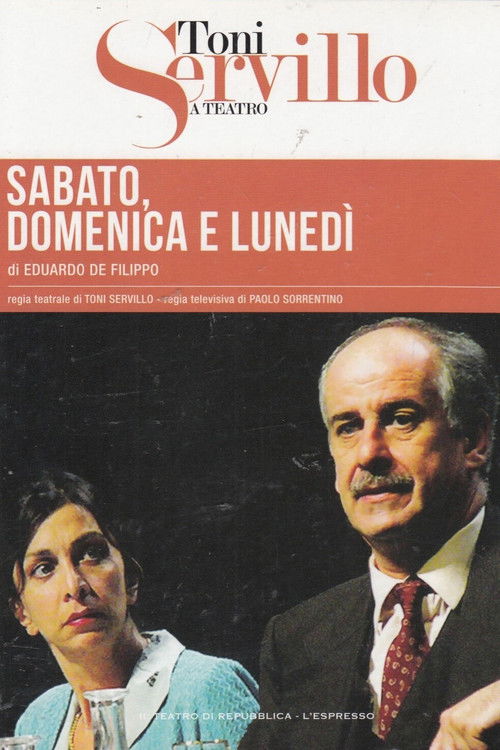
Although this sounds like a weekend like many others, in the Prior house the atmosphere is rather tense because of some nervousness on the part of individual members of the family, especially the father, Peppino, who gets angry with anyone who happens to shoot: with their children, Juliana and Roberto, and his sister, aunt Meme. Meanwhile, his wife Rosa is dedicated to the preparation of the sauce, which she will serve for Sunday's lunch, to which she invited the neighbors, the accountant Ianniello and his wife.
2017

1997

2010

1990

2012

2021

2021

1996
No reviews yet. Be the first to share your thoughts on this movie!
Use the rating form above to leave a star rating and optional review.