The Tall Stranger
1957
No user ratings available yet
Representation score: 1.0 out of 10
Representation Score
Minimal
1972
RDirector
Richard Robinson
Runtime
91 minutes
Average Rating
No ratings yetNew Showbiz Analysis
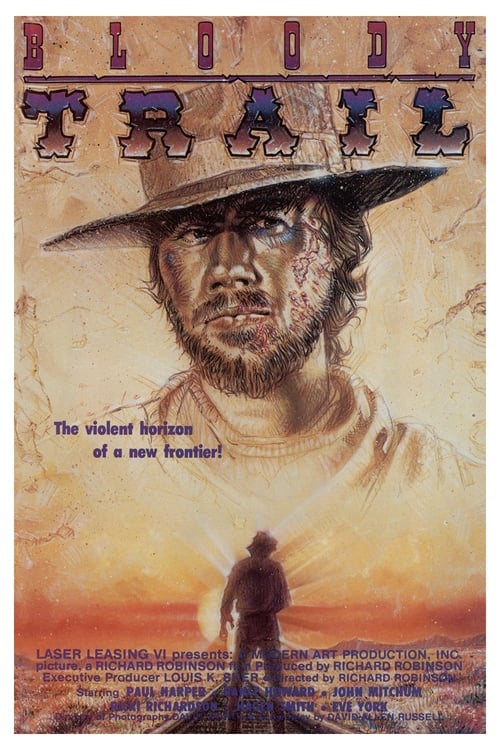
The film opens on a sun-bleached landscape, establishing the desert not as a backdrop but as a physical antagonist that strips away social pretense. Bloody Trail sells a gritty, survivalist vision of the post-Civil War South, where the only currency is the ability to endure. The camera lingers on the exhausted, dirty faces of the survivors, treating their physical toll as a form of moral proof. Jim, the Union soldier, is the unmarked hero, his competence validated by his ability to navigate both the terrain and the human threats that populate it. The sold meaning is one of rugged individualism and secular endurance. The film’s argument is that in the face of chaos, traditional hierarchies dissolve, and only the strong survive. However, this argument is complicated by the film’s treatment of race and gender. While Miriam is depicted as a practical partner, her role is ultimately to support the male-led group. The Black characters, though present, are largely confined to the roles of angry ex-slaves or background texture, never fully escaping the white protagonist’s gaze. The ending settles on a note of weary survival rather than triumph. The camera does not celebrate victory but acknowledges the cost of the journey. This final image reinforces the film’s thesis: the frontier is indifferent to human suffering, and the only moral framework that matters is the one that keeps you alive. The film’s contradictions lie in its claim to subvert traditional Western tropes while still relying on the white male protagonist as the ultimate arbiter of survival.
Category Breakdown
No queer characters or relationships appear. The narrative relies entirely on heterosexual survival dynamics. Absent.
Miriam is a practical partner, yet the cast remains male-dominated. Female presence supports group endurance without challenging patriarchal structures.
Black characters function as background texture or antagonistic forces. The narrative centers the white Union soldier’s perspective on the South.
The post-war South is a hostile, lawless wasteland. Survival is the only moral currency in an indifferent, brutal frontier.
No characters with physical or mental disabilities are present. Physical ailments are environmental consequences, not identity markers.
Present on Screen
Limited or Absent
Official Synopsis
A Union soldier travels through the South right after the Civil War ends, and runs up against angry ex-slaves, murderous former Confederates and desperate women.
1957
1956
1938
1976
1977

1964
1973
1971
No reviews yet. Be the first to share your thoughts on this movie!
Use the rating form above to leave a star rating and optional review.