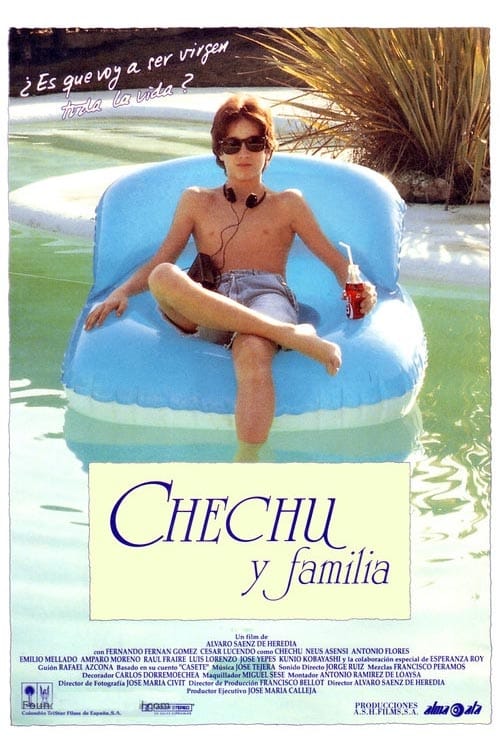
Chechu and Family
1992
No user ratings available yet
Representation score: 3.6 out of 10

Representation Score
Good
1998
Director
Álvaro Sáenz de Heredia
Runtime
92 minutes
Average Rating
No ratings yetNew Showbiz Analysis
Pápa Piquillo offers a meaningful disruption of the social norm by centering a Romani family. This focus provides significant ethnic and cultural value, highlighting a community that exists on the periphery of mainstream Spanish society. However, the film's progressive impact is limited by its reliance on traditional structures. The narrative leans heavily on patriarchal family dynamics and uses a child's accident as a plot device rather than exploring nuanced disability representation. Ultimately, while the film succeeds in showcasing underrepresented ethnic representation, it lacks engagement with LGBTQ+ themes or systemic gender subversion, resulting in a moderate diversity profile.
Category Breakdown
The film does not explicitly include LGBTQ+ characters or non-straight identities. The story follows traditional representation without challenging the assumption that everyone is straight or cisgender.
The story centers around a patriarchal grandfather and a multi-generational family. While grandchildren play a key role in the conflict, there is no indication of challenging traditional gender roles.
By focusing on a Romani family, the film breaks away from the typical depiction of Spanish life. It highlights a non-traditional socioeconomic existence through the protagonist's street performances.
The narrative explores the tension between itinerant lifestyles and modern state institutions. It critiques the rigidity of state institutions when dealing with underrepresented, non-traditional family structures.
A child's accident serves as a major plot point. It is unclear whether the disability is portrayed with real power or simply used as a device for state intervention.
Present on Screen
Limited or Absent
Official Synopsis
Papá Piquillo is a gypsy grandfather who makes a living singing and dancing in the streets of Madrid with a monkey, a goat and his six grandchildren. Things get complicated when one of the children suffers an accident and the police prevent them from continuing to perform.
1992
1982
2000
1982
1988
1978
1992
1989
No reviews yet. Be the first to share your thoughts on this movie!
Use the rating form above to leave a star rating and optional review.