
Meteorites
2019
No user ratings available yet
Representation score: 8.2 out of 10
Representation Score
Fair
2011
Not RatedDirector
Veit Helmer
Runtime
95 minutes
Average Rating
No ratings yetNew Showbiz Analysis
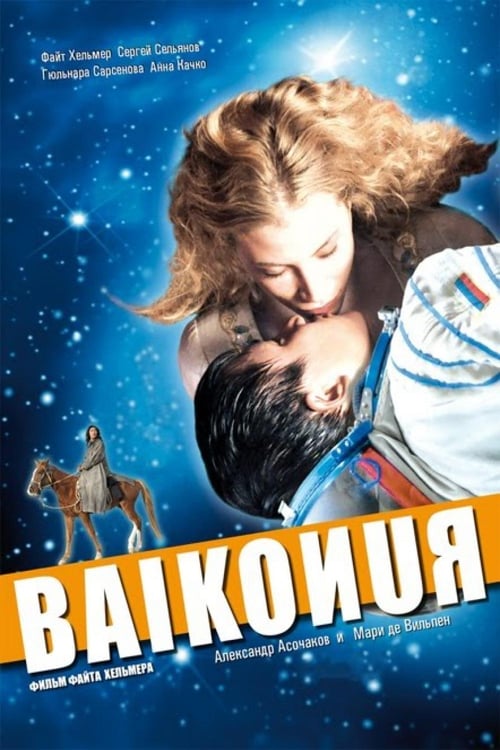
Baikonur is a visually driven piece of international cinema that succeeds by centering a non-Western landscape. Its greatest strength is its commitment to regional authenticity, utilizing a Kazakh setting and cast to move away from Anglo-centric storytelling patterns. However, the film remains limited in its engagement with specific social identities. It does not feature LGBTQ+ representation or characters with disabilities, focusing instead on a more traditional romantic trajectory. Ultimately, the film's value lies in its ability to present a localized morality and a unique cultural intersection between rural tradition and global space exploration.
Category Breakdown
The film lacks explicit LGBTQ+ characters or non-straight relationships. Romantic tension focuses on the traditional connection between Iskander and Nazira.
Nazira provides a nuanced depiction of gender through her spirited and unconventional behavior. She avoids submissive archetypes, though the film does not address systemic hierarchies.
The film excels by centering a predominantly Kazakh cast and setting. This avoids a white-normative lens by prioritizing a non-Western, regional perspective.
The narrative explores a unique blend of local steppe traditions and modern science. It highlights a self-sustaining community operating independently of Western institutions.
There are no prominent depictions of visible or invisible disabilities. Characters are not portrayed through the lens of inspiration porn.
Present on Screen
Limited or Absent
Official Synopsis
“Whatever falls from heaven, you may keep.” So goes the unwritten law of the Kazakh steppes. A law avidly adhered to by the inhabitants of a small village, who collect the space debris that falls downrange from the nearby Baikonur space station. The last two youthful members of the village are the radio operator Iskander, known as Gagarin, and the spirited Nazira. While Nazira finds it increasing difficult to conceal her love for Iskander by means of her unconventional behaviour, Iskander is evidently not only crazy about Baikonur and the vastness of outer space, but also deeply smitten with the beautiful French astronaut Julie Mahé, whose journey to the stars he wistfully follows on television.
2019

2015
1966

2007

1999

2007

2015

2017
No reviews yet. Be the first to share your thoughts on this movie!
Use the rating form above to leave a star rating and optional review.