Johnny Reno
1966
No user ratings available yet
Representation score: 1.6 out of 10
Representation Score
Minimal
1952
ApprovedDirector
Lewis D. Collins
Runtime
69 minutes
Average Rating
No ratings yetNew Showbiz Analysis
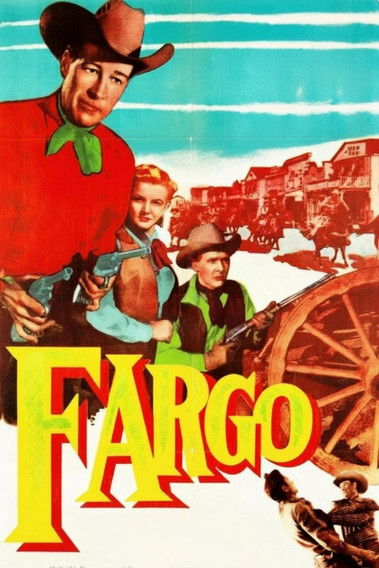
Fargo (1952) is a conventional mid-century Western that adheres strictly to the genre clichés of its time. The narrative structure revolves around traditional masculine conflicts, particularly land disputes and physical violence between cattlemen and farmers. The film presents a homogeneous social environment, relying on established hierarchies of gender and race. It offers little room for diverse perspectives or challenges to the status quo. Ultimately, the work serves as a standard representation of American frontier mythology, prioritizing traditional social structures over inclusive storytelling.
Category Breakdown
The film focuses on masculine-coded ranching disputes. There are no depictions of non-straight or non-cisgender identities or same-sex relationships.
The story is driven by male characters, both heroes and villains. While there is a female supporting character named Kathy, the narrative emphasizes masculine leadership and physical prowess.
The setting reflects a homogeneous Western frontier. There are no indications of diverse casting or non-white characters with significant roles.
The narrative emphasizes traditional Western values such as property rights and individual justice. It aligns with mid-century ideals of order and territoriality.
There is no evidence of characters with visible or invisible disabilities. The plot focuses on physical strength and survival without representing neurodivergent individuals.
Present on Screen
Limited or Absent
Official Synopsis
The brother (House Peters Jr.) of rancher Bill Martin (Bill Elliott) is killed in a stampede started by cattleman. Bill returns to the Fargo country to take his brother's place and is welcomed by law-abiding cattleman MacKenzie (Jack Ingram)) and his daughter Kathy (Phyllis Coates). The leader of the ruthless cattle interests are townsman Austin (Arthur Space) and his henchmen Red (Myron Healey), Link (Robert J. Wilke) and Albord (Terry Frost). Bill has the idea of putting up barbed wire to keep the herds from been driven over the land cultivated by the farmers. He, aided by Tad Sloan (Fuzzy Knight), produces the wire by make-shift methods, but it proves effective. The cattleman charge in court that the wire is dangerous to their herds but lose the case. Austin orders his men to seize Bill, bale him in strands of the wire, and throw him on the stage of the town hall during a fall festival. Bill doesn't take kindly to this and it precipitates open war.
1966
1940
1948

1980
1943

1939
1925
1976
No reviews yet. Be the first to share your thoughts on this movie!
Use the rating form above to leave a star rating and optional review.