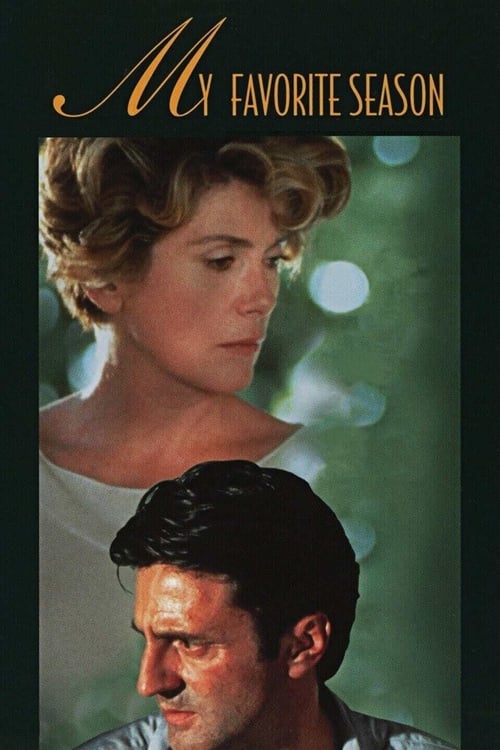
My Favorite Season
1993
No user ratings available yet
Diversity score: 6.3 out of 10

2019
Director
André Téchiné
Runtime
104 minutes
Average Rating
No ratings yetSynopsis
Muriel is overjoyed, as her beloved grandson Alex is staying at her place for a few days before moving to Canada to work. But when the changes in his behavior arouse her curiosity, she is led to the discovery of a dark secret.
Overall Score
Good
Category Breakdown
LGBTQ+ Representation
The film disrupts heteronormative expectations by centering on the fluidity of attraction. It presents sexuality as a spectrum of experience rather than a fixed identity.
Gender Representation
The narrative shifts power away from traditional masculine leadership by centering female subjectivity. Women are portrayed as the primary architects of their own narratives and emotional autonomy.
Racial & Ethnic Diversity
The cast is predominantly white and European, reflecting a specific coastal French setting. This lack of intersectional diversity functions as a form of localized psychological realism.
Religious & Cultural Diversity
The film prioritizes a postmodern, secular worldview over institutional morality. It avoids reinforcing religious dogma, focusing instead on the transient nature of interpersonal connections.
Disability Representation
There are no prominent depictions of physical or neurodivergent disabilities that serve as central plot drivers in the narrative.
Strengths
Areas for Improvement
AI Analysis
André Téchiné’s drama excels in its subversion of traditional social structures, particularly through its progressive approach to gender and sexuality. By prioritizing female agency and the ambiguity of desire, the film moves beyond conventional romantic tropes to explore complex human subjectivity. However, the film remains culturally and racially homogeneous. While the setting justifies the predominantly white European cast, the lack of intersectional diversity limits the scope of its social exploration. Ultimately, the work is a sophisticated study of identity fluidity. It trades traditional moral pillars for a nuanced, situational exploration of personal truth and emotional realism.
1993

2014

2014
2023

2013
2015
2021

2016

2022
2020

2017

2019
No reviews yet. Be the first to share your thoughts on this movie!
Use the rating form above to leave a star rating and optional review.