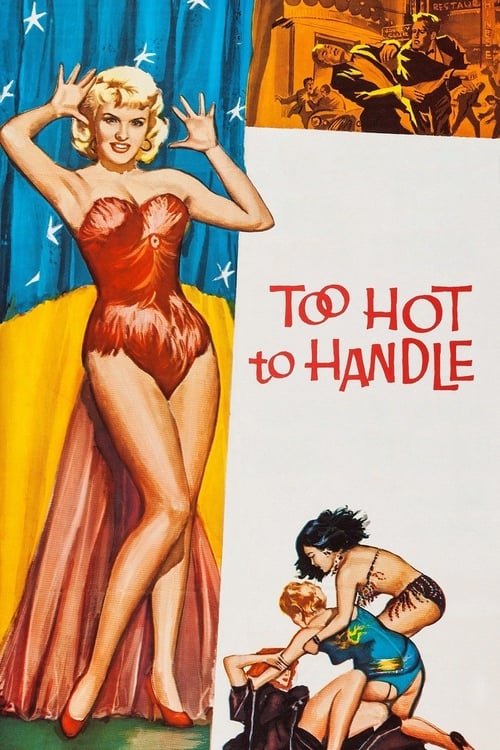
Too Hot to Handle
1960
No user ratings available yet
Diversity score: 2.2 out of 10

1948
ApprovedDirector
Edmond T. Gréville
Runtime
95 minutes
Average Rating
No ratings yetSynopsis
Set in post Second World War Britain, Noose is the story of black market racketeers who face attempts to bring them to justice by an American fashion journalist, her ex-army fiancée and a gang of honest toughs from a local gym. When a corpse turns up at black market front The Blue Moon Club, Yank reporter Carole Landis starts snooping, much to gang boss Joseph Calleia’s annoyance. And soon there’s a hit man on the way...
Overall Score
Limited
Category Breakdown
LGBTQ+ Representation
The film adheres to the heteronormative social structures of 1948. The narrative focuses on traditional romantic pairings, specifically between the American journalist and her ex-army fiancée.
Gender Representation
Carole Landis provides a boost to gender agency by serving as an active, investigative protagonist. However, the central conflict remains heavily anchored in male-driven power dynamics and hierarchies.
Racial & Ethnic Diversity
The setting and plot suggest a demographic homogeneity typical of the era. There is no evidence of characters of color with high agency or a diverse cast.
Religious & Cultural Diversity
The story explores post-war moral ambiguity through the lens of black market crime. It reinforces traditional notions of community morality rather than deconstructing Western institutions.
Disability Representation
There is no mention of characters with visible or invisible disabilities in the narrative.
Strengths
Areas for Improvement
AI Analysis
Noose is a product of its time, reflecting the social and cinematic constraints of post-war Britain. While it offers a degree of female agency through its investigative lead, it remains largely traditional in its social outlook. The film's demographic profile is homogeneous, lacking significant racial or LGBTQ+ representation. The narrative structure prioritizes established gender hierarchies and conventional moral frameworks. Ultimately, the film functions as a standard crime drama of the late 1940s, focusing on urban morality and criminal justice within a narrow social scope.
1960
1952
1953

1954
1946
1957
1946
1941
1948
1955
1946
1958
No reviews yet. Be the first to share your thoughts on this movie!
Use the rating form above to leave a star rating and optional review.