
The Common Man
1975
No user ratings available yet
Representation score: 4.9 out of 10
Representation Score
Good
1978
Director
Francis Girod
Runtime
112 minutes
Average Rating
No ratings yetNew Showbiz Analysis
Francis Girod’s adaptation provides a sharp, dual-sided critique of racial and social hierarchies. By avoiding the typical romanticized views of historical dramas, the film focuses on systemic prejudice as a shared human issue. It uses the central interracial romance to expose the tension between old colonial legacies and new African states, creating a complex, non-idealized view of a changing political landscape. The film's strength lies in its refusal to offer a simple moral message. Instead, it uses the interracial relationship to highlight the friction between old colonial legacies and new African states, presenting a multifaceted view of a changing political landscape. While the film excels in critiquing racial and cultural issues, it lacks representation of LGBTQ+ identities or disabilities.
Category Breakdown
The film doesn't focus on LGBTQ identities or non-straight relationships. It explores the breakdown of social norms through interracial intimacy but doesn't include specific storylines for LGBTQ or gender-diverse characters.
Laurence is a key driver of the plot, showing strong autonomy that challenges patriarchal and colonial control. Her actions force male characters to respond, highlighting her central role in the story.
The film offers a complex look at racial prejudice from both French colonialists and emerging African leaders. The interracial relationship between Laurence and Patrice Doumbe breaks down ideas of racial uniformity.
The narrative questions the stability of Western institutions by showing both colonial and nationalist governments as corrupt. It uses the changing political landscape to explore the erosion of traditional social norms.
There is no indication of the portrayal of physical or cognitive disabilities in the film.
Present on Screen
Limited or Absent
Official Synopsis
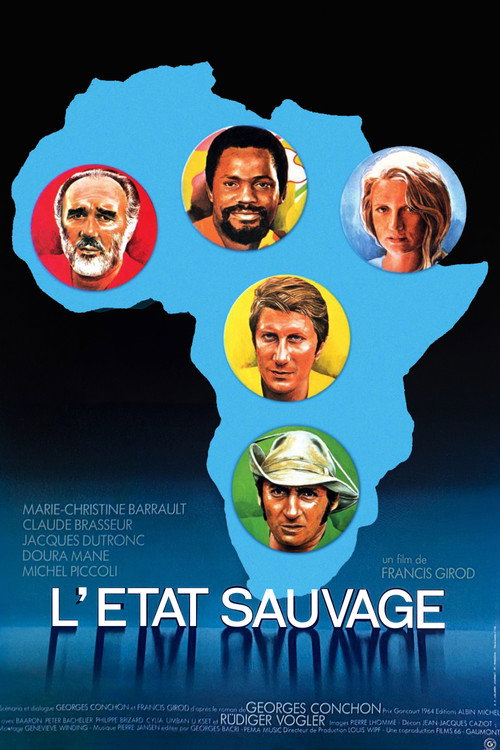
L'Etat Sauvage is based on the novel by Georges Conchon which won the highly esteemed Prix de Goncourt. The story chronicles the mindless racism of both the departing French colonial overlords and the emergent black Africans in a newly emerging African state. Laurence (Marie-Christine Barrault) suffers the outrage of her white acquaintances, including her former lover Gravenoir (Claude Brasseur) and her ex-husband Avit (Jacques Dutronc), for her affair with Patrice Doumbe (Doura Mane), an official in the new government. He in turn is ridiculed by his fellow cabinet ministers for stepping out with a white woman. The vilification escalates to such a point that Patrice is brutally murdered, and Laurence barely escapes the country alive, with the help of her ex-husband Avit.
1975
1966
1981
1988
1960

1989
1962
1950
No reviews yet. Be the first to share your thoughts on this movie!
Use the rating form above to leave a star rating and optional review.