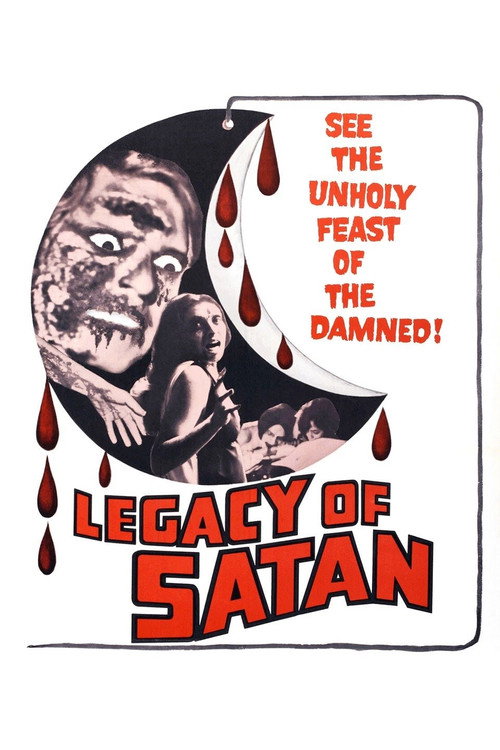
Legacy of Satan
1974
No user ratings available yet
Representation score: 3.3 out of 10

Representation Score
Minimal
1972
Director
Tom Parkinson
Runtime
84 minutes
Average Rating
No ratings yetNew Showbiz Analysis
Disciple Of Death (1972) operates within the narrow confines of early 1970s horror archetypes. The narrative is driven by a singular, predatory antagonist whose goals dictate the roles of all other characters. The film fails to provide meaningful representation across most categories, instead relying on established clichés of vulnerability and homogeneity. It prioritizes a traditional power dynamic that limits character's ability to drive the story. Ultimately, the work lacks multi-layered complexity, reinforcing historical social hierarchies rather than challenging them.
Category Breakdown
The film does not include any LGBTQ+ characters or non-cisgender identities. It also does not offer any critique of the assumption that everyone is straight or cisgender.
Women in the film are portrayed as passive victims, serving primarily as catalysts for ritualistic goals. This reinforces outdated stereotypes of female vulnerability and a lack of control over their own lives.
The story relies heavily on Western European mythological clichés, indicating a homogeneous casting structure. There is no indication of racial diversity or characters reflecting multiple aspects of identity.
The film uses the subversion of the priesthood as a typical horror cliché. It relies on traditional moral binaries rather than providing nuanced critiques of religious institutions.
There is no information about the inclusion or portrayal of characters with physical or neurodivergent disabilities.
Present on Screen
Limited or Absent
Official Synopsis
A henchman of Satan poses as a priest in order to get closer to young virgins he needs for human sacrifice.
1974
1960
1977

1977
1976
1972

1972

1973
No reviews yet. Be the first to share your thoughts on this movie!
Use the rating form above to leave a star rating and optional review.