Cousin Bobby
1992
No user ratings available yet
Representation score: 6.3 out of 10
Representation Score
Limited
1967
Director
Bill Jersey, Barbara Connell
Runtime
58 minutes
Average Rating
No ratings yetNew Showbiz Analysis
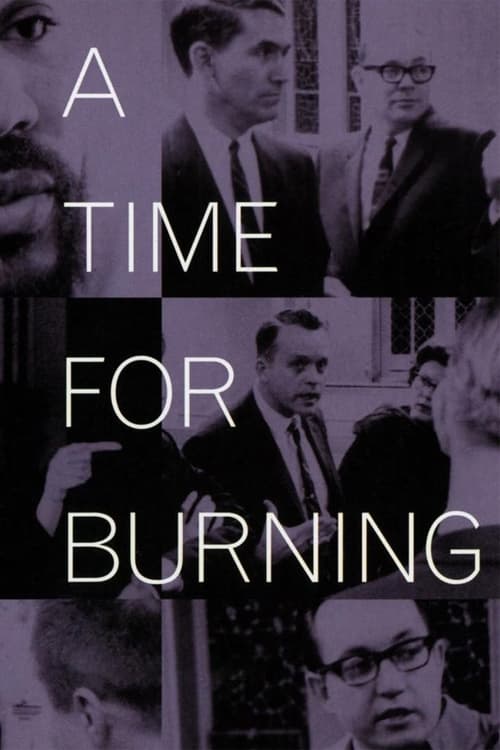
A Time for Burning serves as a vital historical document that critiques the social inertia of mid-century religious institutions. Its primary value lies in its examination of racial segregation and the active struggle for integration within a white-dominated space. While the film excels at deconstructing institutional complacency and highlighting racial dynamics, it lacks breadth in other areas. The focus remains heavily on ecclesiastical leadership, which limits the visibility of diverse gender roles and other identity-based perspectives. Ultimately, the film is a focused study of racial justice and systemic conflict, making it a significant piece of progressive documentary history despite its narrow demographic scope.
Category Breakdown
The film contains no documented evidence of LGBTQ+ characters or themes. There is no information available regarding queer representation within this historical context.
The story focuses on male-dominated church leadership and congregational issues. There is little evidence of women playing a significant role or challenging gender hierarchies within the church.
The film highlights the tension between an all-white congregation and Black Lutherans in Omaha. It gives ability to act to the minister fighting segregation and includes perspectives from the Black community.
The documentary critiques the Augustana Lutheran Church as a site of systemic failure rather than stability. It frames the congregation's resistance to integration as a moral and institutional obstacle.
There is no indication of characters with visible or invisible disabilities. The documentation provides no information regarding disability representation.
Present on Screen
Limited or Absent
Official Synopsis
Explores the attempts of the minister of the Augustana Lutheran Church in Omaha, Nebraska, to persuade his all-white congregation to reach out to "negro" Lutherans in the city's north side.
1992

2003
2002
2004

1925
1994
1994

1994
No reviews yet. Be the first to share your thoughts on this movie!
Use the rating form above to leave a star rating and optional review.