Red Tails
2012
No user ratings available yet
Representation score: 3.1 out of 10
Representation Score
Limited
2002
RDirector
John Woo
Runtime
134 minutes
Average Rating
No ratings yetNew Showbiz Analysis
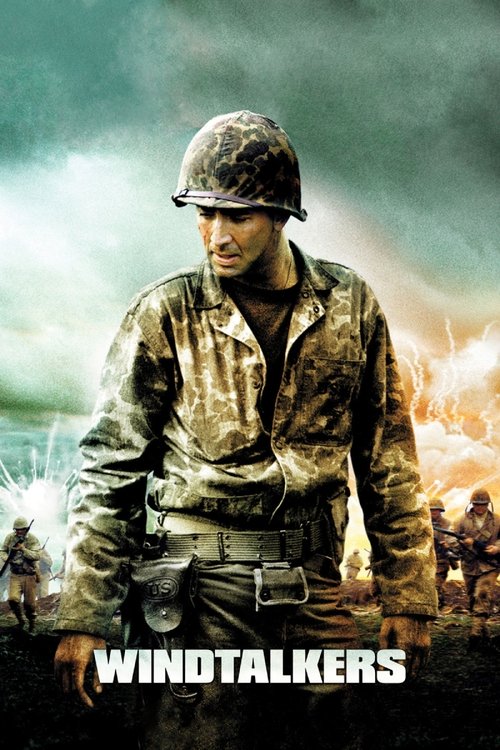
Windtalkers is a historical war drama that centers on the essential contributions of the Navajo people during World War II. The film uses the Navajo language as a central plot device, exploring the tension between cultural utility and systemic political exclusion. While the film provides significant influence to Indigenous characters through prominent lead roles, it remains confined by its historical setting. The heavy focus on military combat results in a male-dominated cast and a complete absence of LGBTQ+ representation. Ultimately, the film's strength lies in its critique of how the state utilizes Indigenous knowledge while simultaneously denying those same populations full social and political influence.
Category Breakdown
The film follows a traditional mid-20th-century social framework with no identifiable LGBTQ+ characters or narratives involving non-straight relationships.
The narrative focuses heavily on male characters, reflecting the historical context of WWII combat. Women are limited to supporting roles, resulting in a lack of female influence on the story.
The film highlights Indigenous identity through lead roles played by Adam Beach and Graham Greene, emphasizing the socioeconomic and political marginalization of Native Americans during the war.
The story critiques Western institutional structures by portraying the military bureaucracy as an obstructive force, highlighting the friction between Navajo soldiers and a state that exploits their culture.
No significant depictions of visible or invisible disabilities were found within the primary character arcs.
Present on Screen
Limited or Absent
Official Synopsis
Joe Enders is a gung-ho Marine assigned to protect a "windtalker" - one of several Navajo Indians who were used to relay messages during World War II because their spoken language was indecipherable to Japanese code breakers.
2012

1955
2005
1964
2006
1976

2008
1950
No reviews yet. Be the first to share your thoughts on this movie!
Use the rating form above to leave a star rating and optional review.