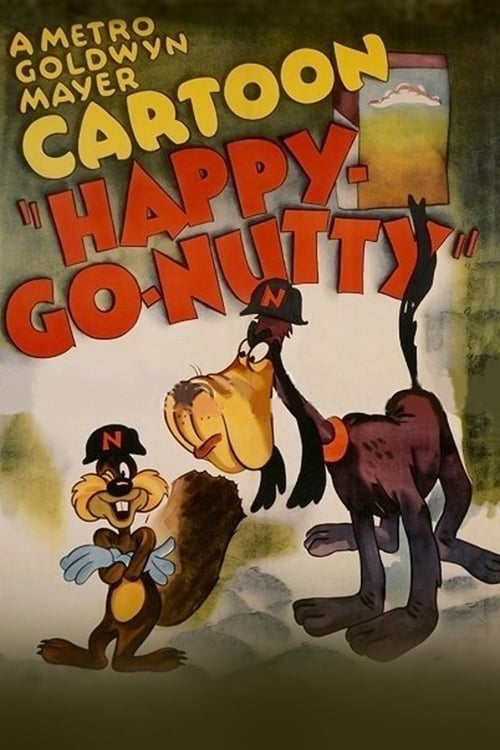
Happy-Go-Nutty
1944
No user ratings available yet
Diversity score: 1.6 out of 10

1951
ApprovedDirector
Tex Avery
Runtime
6 minutes
Average Rating
No ratings yetSynopsis
Droopy and Spike are applying for the job of Dare Devil Dog at the Circus, and the one who give the best performance in a variety of "feats of strength and daring" will get it.
Overall Score
Minimal
Category Breakdown
LGBTQ+ Representation
The film lacks LGBTQ+ characters or explorations of non-heteronormative identities. Interpersonal dynamics follow the heteronormative standards of the 1950s.
Gender Representation
Characters adhere to mid-century gender archetypes, with female characters serving mostly as catalysts. Droopy’s underdog status provides a slight subversion of traditional masculine dominance through slapstick.
Racial & Ethnic Diversity
The cast consists of anthropomorphic archetypes within a generic setting. There is no notable racial or ethnic diversity or identity-based storytelling present.
Religious & Cultural Diversity
The narrative utilizes conventional Western comedic structures and standard slapstick tropes. It avoids critiques of religion, capitalism, or the nuclear family, reinforcing a traditional status quo.
Disability Representation
There are no depictions of neurodivergence or physical disabilities. Droopy’s lethargy and deadpan delivery function as comedic devices rather than meaningful representations of lived experience.
Strengths
Areas for Improvement
AI Analysis
Tex Avery’s 1951 short is a quintessential example of mid-century slapstick that prioritizes surrealist humor over social commentary. The narrative architecture relies on established tropes and does not attempt to deconstruct traditional social hierarchies or gender roles. The work reflects the homogeneous casting and narrow thematic scope prevalent in early 1950s American animation. It functions as a situational comedy where conflict is purely physical rather than identity-driven. Ultimately, the film lacks the intentionality required to engage with intersectional or progressive themes, remaining firmly rooted in the era's conventional social norms.
1944
1955
1947
1946
1947
1950
1941
1952
1937
1949
1951
1950
No reviews yet. Be the first to share your thoughts on this movie!
Use the rating form above to leave a star rating and optional review.