
Wavelength
1967
No user ratings available yet
Representation score: 0.1 out of 10
Representation Score
Limited
1971
Director
Hollis Frampton
Runtime
26 minutes
Average Rating
No ratings yetNew Showbiz Analysis
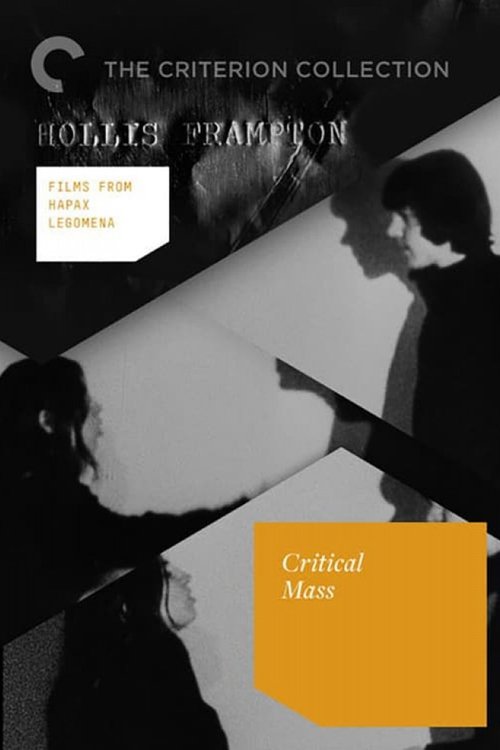
Hapax Legomena III: Critical Mass functions primarily as a formalist experiment focused on psychological abstraction and the breakdown of communication between two individuals. Because the work prioritizes structuralist experimentation over traditional character development, it lacks the demographic markers necessary for a comprehensive quantitative analysis. The film’s value lies in its disruption of narrative expectations rather than its engagement with identity politics. Ultimately, the film distinguishes itself by rejecting standard Hollywood storytelling conventions in favor of a postmodernist framework.
Category Breakdown
The film depicts a couple living together but does not include any clear indicators of LGBTQ+ identities or relationships.
The story focuses on a male and female pair. Although the director's style often questions traditional roles, there is no clear evidence of challenging gender hierarchies or giving women significant roles.
Due to limited information about the cast, it is difficult to assess the racial diversity. The story centers around a single family unit, which may suggest a lack of varied representation.
The film's structure challenges conventional Western storytelling by avoiding linear cause-and-effect relationships. It disrupts the typical moral certainty found in mainstream movies.
There is no indication of characters with visible or invisible disabilities in the synopsis.
Present on Screen
Limited or Absent
Official Synopsis
A man and a woman have been living together for six months. After disappearing for two days, the man returns and acts as if nothing has happened, refusing to say where he was.
1967

1977
1978

1961
1961

1966

1963
1977
No reviews yet. Be the first to share your thoughts on this movie!
Use the rating form above to leave a star rating and optional review.