
Sebastián
2014
No user ratings available yet
Representation score: 5.8 out of 10
Representation Score
Good
2015
Director
Miguel Lafuente
Runtime
23 minutes
Average Rating
No ratings yetNew Showbiz Analysis
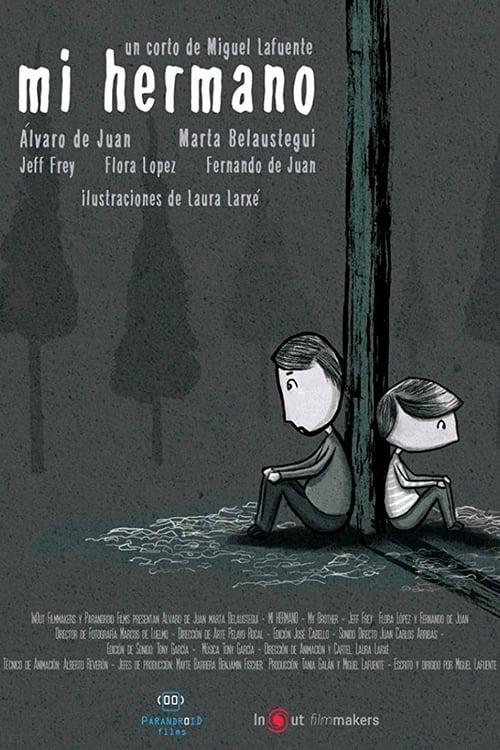
The film opens in the quiet, naturalistic interior of a Spanish middle-class home, a space that feels less like a refuge and more like a surveillance state. *Mi hermano* (2015) uses this domestic setting to stage a collision between two moral worlds: the liberal, secular life of Alberto in Berlin and the rigid, secretive hierarchy of his family of origin. The sold meaning is clear: the traditional family unit is a cage, maintained by a competent but controlling mother and a passive father who never pays the price for the household’s dysfunction. Alberto, a gay comics illustrator, represents the modern, authentic self that has successfully fled this environment. His return is not a homecoming but an intrusion, forcing the family to confront the secret they have kept. The camera treats Alberto as the moral center, lingering on his face as the victim of circumstance, while the parents are framed as hollow or ineffective. The father’s passivity is the film’s quiet joke; he holds the title of patriarch but does none of the work, allowing the mother to dominate the narrative. The ending settles on unresolved tension rather than reconciliation. The family remains fractured but intact, the secret unspoken but felt. This is not a story of healing or integration; it is a story of endurance. The film argues that the conservative family is a trap, and that the only way to be free is to leave. The last image affirms the liberal default: the individual who escapes the family is the one who is whole, while those who remain are trapped in a cycle of silence and control. The film’s argument is consistent, if somewhat predictable, in its critique of traditional Western family structures.
Category Breakdown
Alberto is a gay man living with his partner in Berlin. His identity drives the plot, positioning queer life as the stable baseline against which the conservative family is measured.
The mother operates as the competent center of the household, managing the crisis. The father is depicted as passive and ineffective, shifting domestic authority to the female figure while the male protagonist navigates the resulting power imbalance.
The cast is entirely white, reflecting a homogeneous Spanish middle-class setting. No racial dynamics, immigrant perspectives, or non-white characters appear on screen to challenge the default whiteness of the narrative.
The conservative family home is framed as a site of repression and surveillance, contrasting with the liberal, secular life in Berlin. Traditional family bonds are treated as a burden or trap, with the "unexpected event" serving as a mechanism to expose the dysfunction of the old guard.
No characters display physical, sensory, or cognitive disabilities. The narrative focuses exclusively on psychological tension and familial secrets, with no impaired bodies or neurodivergent traits depicted as central to the plot.
Present on Screen
Limited or Absent
Official Synopsis
Alberto has fled as far as possible from his conservative family. He lives in Berlin with his partner, and works as a comics illustrator. But an unexpected event forces him to return home and face the past.
2014

2015

2015

2019

2016
2010

2014

2019
No reviews yet. Be the first to share your thoughts on this movie!
Use the rating form above to leave a star rating and optional review.