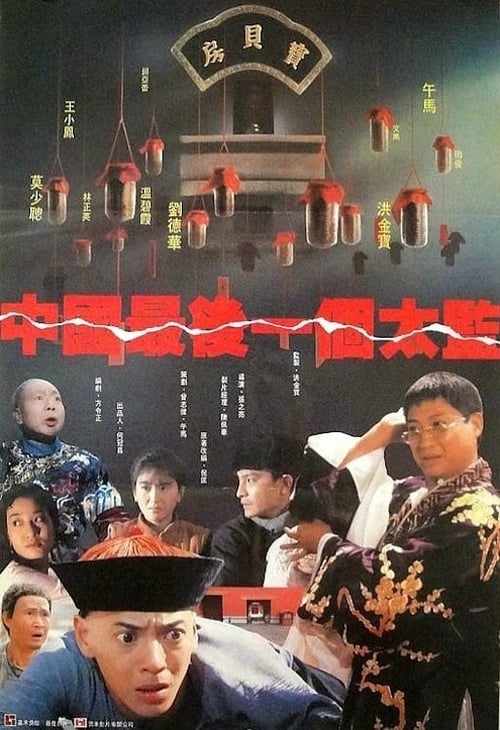
Last Eunuch In China
1987
No user ratings available yet
Diversity score: 7.5 out of 10
1991
Director
Tian Zhuangzhuang
Runtime
103 minutes
Average Rating
No ratings yetSynopsis
Set against the backdrop of the Boxer Rebellion and the takeover of the Forbidden City by foreign powers, the empress-dowager Cixi and her notorious chief eunuch fight a losing battle to preserve their corrupt and autocratic regime.
Overall Score
Good
Category Breakdown
LGBTQ+ Representation
The film explores the social realities of the eunuch system within the Forbidden City. It centers on characters existing outside traditional cisnormative and heteronormative structures. This provides a lens into non-traditional gendered existence and unique power dynamics.
Gender Representation
The narrative disrupts conventional hierarchies by centering the political agency of Empress Dowager Cixi. It highlights a female-driven power center where women and non-traditional gender roles drive the plot. This subverts the trope of the stable male leader.
Racial & Ethnic Diversity
The cast is ethnically homogeneous, reflecting the historical reality of the Qing Dynasty. However, the film uses a post-colonial lens to examine the friction between indigenous structures and foreign Western influence. It avoids a white-normative perspective.
Religious & Cultural Diversity
The film presents a critique of institutional stability, portraying the imperial family as a corrupt and decaying structure. It embraces moral relativism and situational ethics. The narrative focuses on characters navigating a collapsing order through survival.
Disability Representation
The film addresses the physical and psychological realities of being a eunuch. It treats bodily alterations as a central, lived reality. These characters are portrayed as pivotal political actors rather than objects of pity.
Strengths
Areas for Improvement
AI Analysis
Tian Zhuangzhuang’s film serves as a sophisticated deconstruction of traditional power. By focusing on the collapse of an autocratic regime, it challenges standard historical romanticism. The narrative centers on those existing outside conventional gender norms, providing a complex view of systemic decay. The film succeeds in subverting patriarchal tropes by placing female authority and non-traditional gender roles at the heart of the political maneuvering. It avoids the pitfalls of Western-centric historical epics by focusing on the internal complexities of Chinese institutional rot. While the ethnic homogeneity reflects the period's reality, the film's strength lies in its critique of centralized authority. It presents a world of moral relativism where characters must navigate a claustrophobic and oppressive system to survive.
1987
2022
1982
2011
1918
1995
2001

1999
2008
1983
1979

1985
No reviews yet. Be the first to share your thoughts on this movie!
Use the rating form above to leave a star rating and optional review.