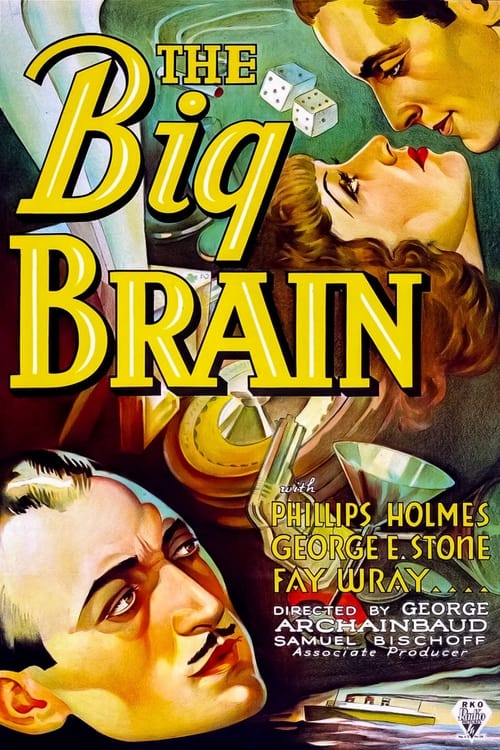
The Big Brain
1933
No user ratings available yet
Diversity score: 1.3 out of 10

1932
NRDirector
Howard Bretherton, William Keighley
Runtime
79 minutes
Average Rating
No ratings yetSynopsis
Unscrupulous Chicago janitor Paul Kroll uses deceit to fund a return trip to his homeland of Sweden. There, via ongoing continuing deceit and manipulation, he gradually attains a monopoly on the matchstick market in several countries and becomes an influential international figure. Based on the true story of Ivar Kreuger.
Overall Score
Limited
Category Breakdown
LGBTQ+ Representation
The film focuses entirely on the professional rise and fall of a male industrialist. It contains no queer themes or non-cisnormative identities.
Gender Representation
The plot is driven by male-dominated spheres of finance and industry. Female characters are relegated to secondary, domestic, or social roles.
Racial & Ethnic Diversity
The setting and cast reflect a homogeneous European demographic. There is no significant non-white representation within this Swedish-centered biographical drama.
Religious & Cultural Diversity
The film offers a cynical critique of unchecked capitalist expansion. It disrupts heroic entrepreneur tropes by highlighting the ethical decay of global monopolies.
Disability Representation
There is no evidence of characters with visible or invisible disabilities. Disability is not used as a narrative theme or plot device.
Strengths
Areas for Improvement
AI Analysis
The film is a period-specific biographical drama that mirrors the social and demographic norms of 1932. Its narrative architecture is built upon traditional masculine power dynamics and a homogeneous European setting, offering very little demographic breadth. While the film lacks intersectional complexity, it provides a nuanced look at the corruption of global capitalism. By portraying the protagonist's success through deceit, it avoids simple glorification in favor of a more morally relativistic view of industrial power. Ultimately, the work remains centered on individual ambition within established, traditional institutional frameworks, resulting in a low diversity score.
1933

2011
1936

1986
1934
1929
1932

1939
1933

1915
1932
1910
No reviews yet. Be the first to share your thoughts on this movie!
Use the rating form above to leave a star rating and optional review.