Easter in Art
2020
No user ratings available yet
Representation score: 1.8 out of 10
Representation Score
Minimal
2015
Not RatedDirector
Andy Guérif
Runtime
61 minutes
Average Rating
No ratings yetNew Showbiz Analysis
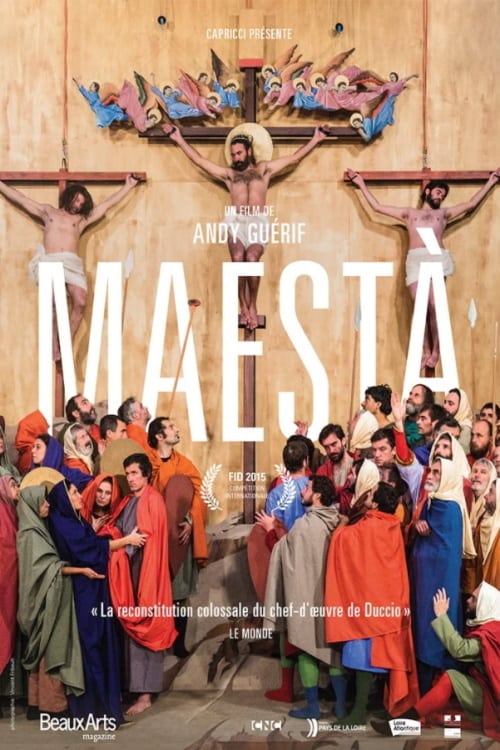
Andy Guérif’s film is a detailed documentary adaptation that recreates Duccio’s 14th-century masterpiece through twenty-six panels. The work adheres closely to historical and iconographic fidelity, maintaining a connection to medieval theological frameworks. The film's structure emphasizes the preservation of religious art rather than challenging traditional Western cultural or gendered structures. Its narrative remains rooted in historical religious norms. Ultimately, the film serves as a preservation of religious art rather than a platform for contemporary social representation or diverse character-driven arcs.
Category Breakdown
The film focuses on preserving the original 14th-century artwork and its themes. There are no representations of LGBTQ+ narratives or non-traditional gender identities.
Women in the film, such as the Marys, are portrayed primarily in relation to male figures. The film upholds traditional gender roles found in religious stories.
The visual style is inspired by Italian Gothic art. Although the subjects are historically Middle Eastern, the casting reflects the artistic style of the time rather than modern diversity.
The film celebrates traditional Christian morality and religious heritage. It does not explore secular or deconstructive perspectives.
The film does not focus on disability, neurodivergence, or physical impairments as central elements of the story.
Present on Screen
Limited or Absent
Official Synopsis
Andy Guérif adapts the Maestà of Duccio as a tableau vivant: the tale of the Christ’s Passion in twenty-six successive panels, from the arrival in Jerusalem to the road to Emmaus.
2020

2011
1955
2003
2018
1965
1977
2006
No reviews yet. Be the first to share your thoughts on this movie!
Use the rating form above to leave a star rating and optional review.