
All Men Are the Same
1994
No user ratings available yet
Representation score: 2.7 out of 10
Representation Score
Fair
1973
Director
Fernando Merino
Runtime
85 minutes
Average Rating
No ratings yetNew Showbiz Analysis
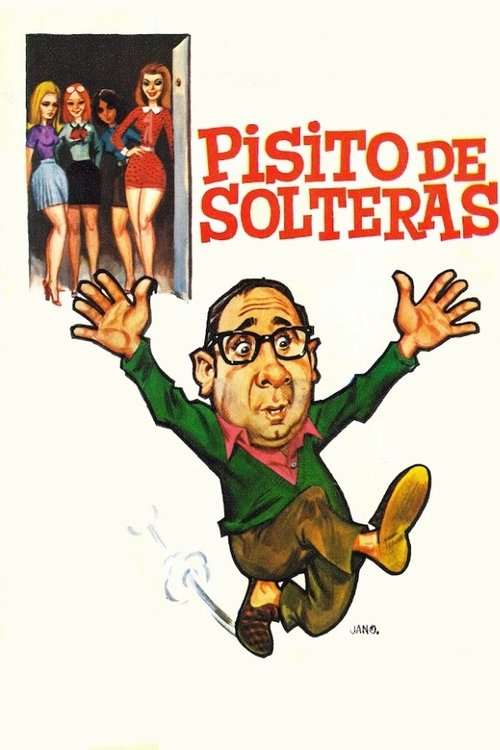
Pisito de solteras serves as a comedy that flips traditional gender roles. By taking away the male lead's expected social power and focusing the narrative on a female-led community, the film goes beyond the conservative formulas of the time. While the film explores gendered power dynamics, it does not delve into the complexities of multiple identities. Its narrative stays within the context of traditional romantic clichés and the demographic uniformity of 1970s Spain.
Category Breakdown
The movie centers around a failed heterosexual relationship and the social displacement of the male lead. It does not include any LGBTQ+ characters or explore non-straight identities.
The film challenges traditional gender roles by putting a passive male protagonist in a female-dominated environment. This switch gives the female characters more control over the social situation.
The Madrid apartment setting implies a homogeneous demographic typical of 1973 Spain. There is no indication of diverse racial or ethnic representation.
The plot questions traditional social institutions by depicting a wedding as an unwanted event, introducing skepticism towards conventional marriage norms.
There is no mention of any visible or invisible disabilities in the character descriptions.
Present on Screen
Limited or Absent
Official Synopsis
The shy professor Emilio is about to celebrate a wedding nobody wants. At the last minute he escapes and settles in a Madrid apartment shared by four friends of his ex-fiancee. The unhappy man is like a little lamb in a wolf's lair - in this case four wolves.
1994
1971

1966
1980

1973
1974

1968

1971
No reviews yet. Be the first to share your thoughts on this movie!
Use the rating form above to leave a star rating and optional review.