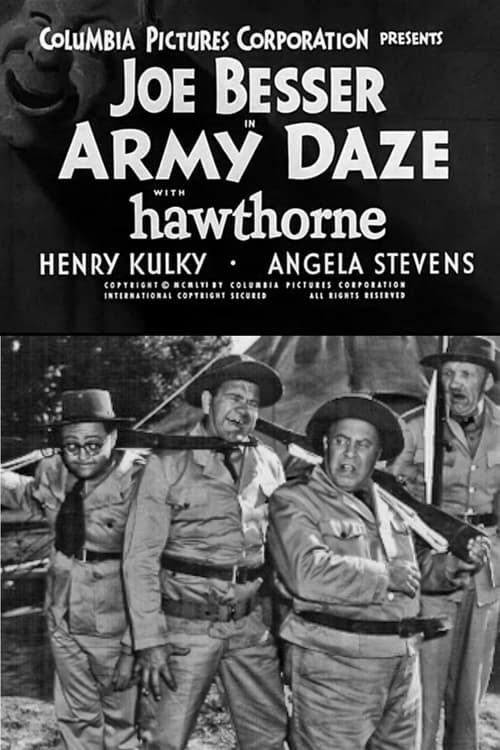
Army Daze
1956
No user ratings available yet
Representation score: 1.4 out of 10
Representation Score
Minimal
1952
ApprovedDirector
Jules White
Runtime
16 minutes
Average Rating
No ratings yetNew Showbiz Analysis
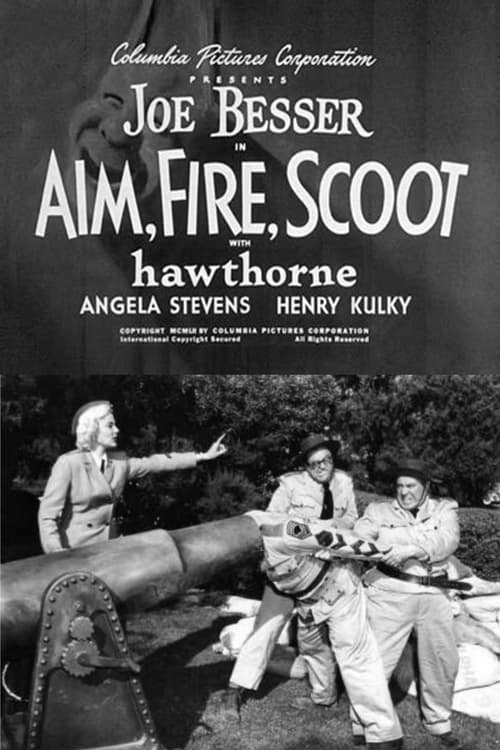
Aim, Fire, Scoot is rooted in the slapstick traditions of the mid-20th century, emphasizing simple comedic structures over complex social commentary. The central conflict, which involves two men competing for a woman, relies on outdated romantic clichés that limit the female character's influence. The film operates within a narrow framework of traditional gender and racial norms typical of its era, offering no meaningful critique of broader social structures or cultural dynamics.
Category Breakdown
The story revolves around a love triangle involving two men competing for a single female interest. It does not feature any non-straight or non-cisgender identities and does not question the assumption that everyone is straight.
The female character serves mainly as a prize or catalyst for male conflict, reinforcing traditional gender roles where women are passive and controlled by men’s actions.
Following the casting standards of the 1950s, the film likely features a predominantly white cast with no evident diversity in racial or ethnic backgrounds.
The themes focus on individual romantic conflicts without addressing broader cultural or societal issues. The story adheres to conventional storytelling norms of the mid-20th century.
The film does not provide any information about characters with physical or neurodevelopmental disabilities.
Present on Screen
Limited or Absent
Official Synopsis
Joe and his sergeant fall for the same girl.
1956
1941
1950
1946
1941

1957
1950
1947
No reviews yet. Be the first to share your thoughts on this movie!
Use the rating form above to leave a star rating and optional review.