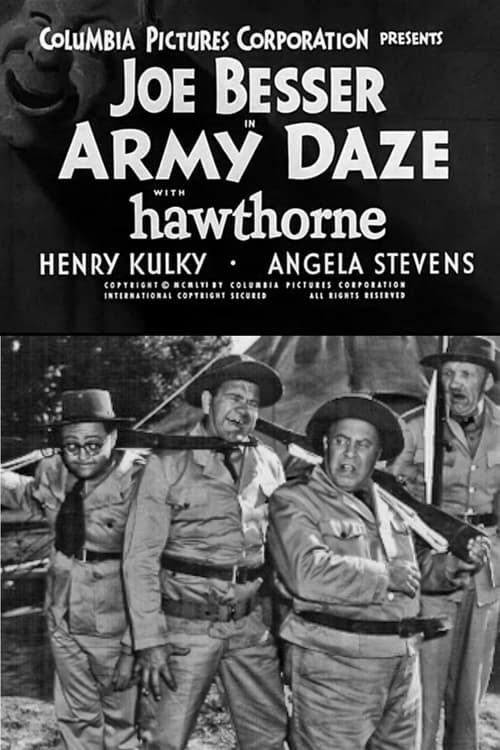
Army Daze
1956
No user ratings available yet
Representation score: 1.4 out of 10
Representation Score
Minimal
1950
ApprovedDirector
Jules White
Runtime
17 minutes
Average Rating
No ratings yetNew Showbiz Analysis
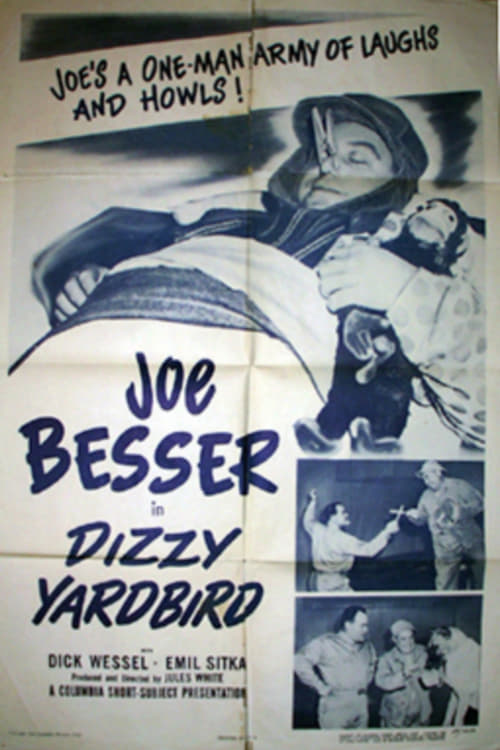
Dizzy Yardbird is a product of its time, functioning as a traditional 1950s slapstick comedy. The narrative structure is centered around rigid social hierarchies and the enforcement of military discipline, prioritizing gag-driven conflict over social depth. The film reinforces mid-century institutional norms. By focusing on the friction between a sergeant and a subordinate, the story emphasizes traditional power structures and masculine performance of toughness. Ultimately, the work lacks engagement with the way different parts of someone's identity overlap. It serves as a period piece that reflects the social constraints and homogeneous standards of the early-to-mid 20th-century studio system.
Category Breakdown
The film does not include any characters with non-straight sexual orientations or non-cisgender genders. It does not explore or question the assumption that everyone is straight or cisgender.
The story revolves around a male-dominated military environment. It reinforces traditional masculine hierarchies through the sergeant's efforts to enforce discipline on Joe.
The film likely reflects the era's tendency towards homogeneous, Anglo-centric casting. There is no indication of diverse racial or ethnic representation or casting actors with backgrounds different from the roles' traditional expectations.
The narrative centers on preserving traditional Western military institutions. It upholds institutional order and authority without offering cultural critique.
There is no evidence of characters with visible or invisible disabilities. No characters with disabilities are shown taking control over their situations.
Present on Screen
Limited or Absent
Official Synopsis
Joe is in the army, and his sergeant is determined to make a soldier out of Joe if he has to kill him to do it.
1956
1949
1941
1943
1951
1941
1950
1974
No reviews yet. Be the first to share your thoughts on this movie!
Use the rating form above to leave a star rating and optional review.