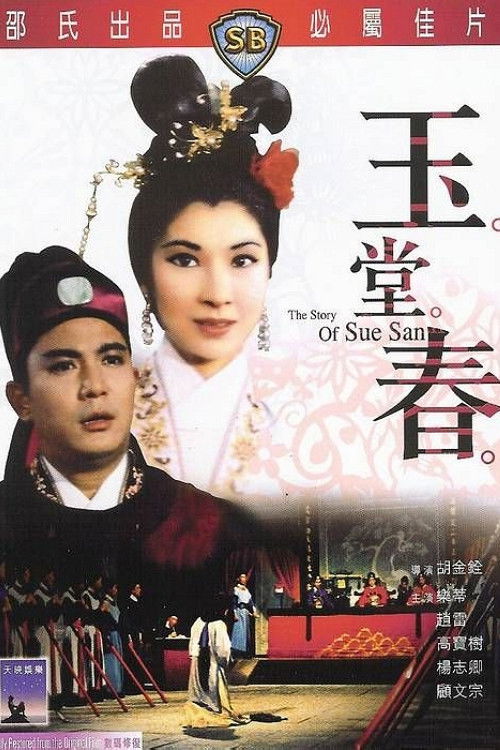
The Story of Sue San
1964
No user ratings available yet
Diversity score: 5.0 out of 10
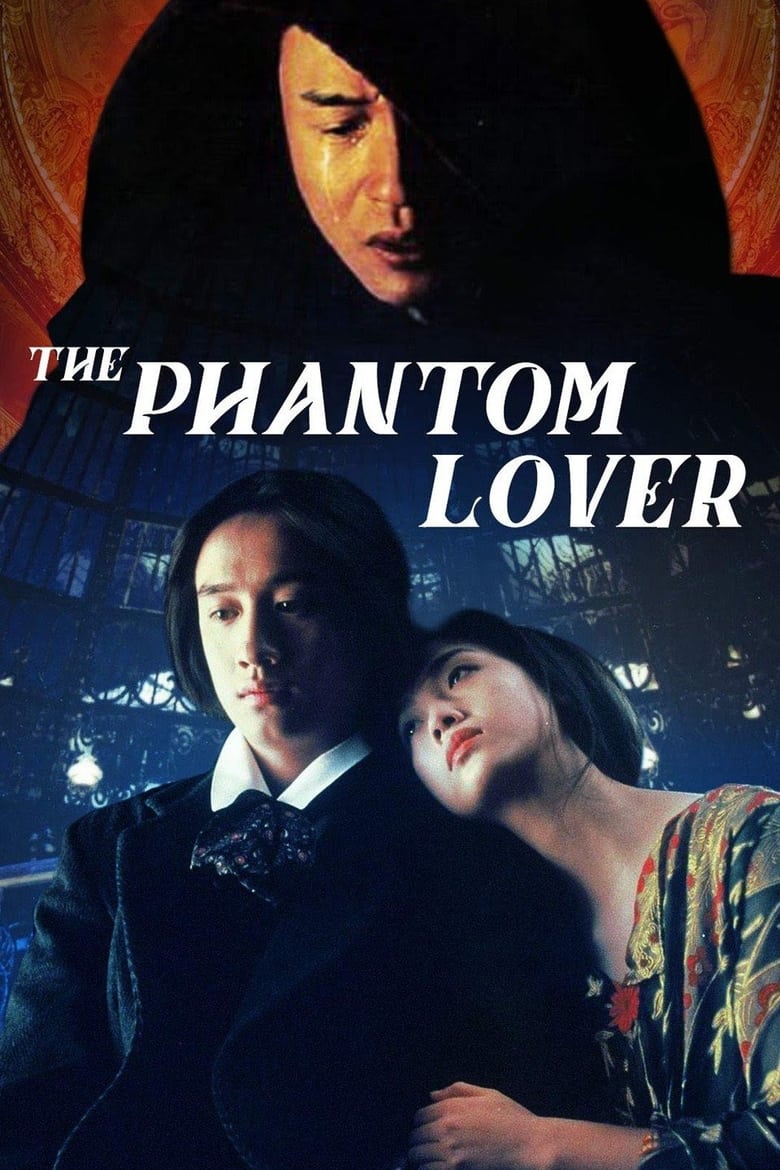
1995
Director
Ronny Yu
Runtime
100 minutes
Average Rating
No ratings yetSynopsis
In 1936 China, a nearly bankrupt drama troupe starts performing in a burned-out theater where the great actor Song Danping was killed. One of the actors, Wei Qing, starts seeing strange apparitions that could revive his troupe and deliver him to the same fate as Song Danping.
Overall Score
Fair
Category Breakdown
LGBTQ+ Representation
The theatrical setting offers potential for exploring non-traditional intimacy and gender performance. However, the narrative lacks explicit confirmation of same-sex pairings or non-cisnormative identities.
Gender Representation
The drama troupe setting allows for gender subversion through stylized performance and cross-dressing. The focus on a great actor's fate suggests complex arcs that may challenge traditional masculine leadership.
Racial & Ethnic Diversity
Set in 1936 China, the film provides a non-Western perspective on tragedy. It centers Chinese identities as the primary drivers of the plot amidst historical and economic pressures.
Religious & Cultural Diversity
The story explores the intersection of art, superstition, and economic hardship. The presence of apparitions suggests a narrative prioritizing subjective morality over rigid institutional doctrines.
Disability Representation
There is no evidence regarding the portrayal of physical or neurodivergent disabilities within the narrative.
Strengths
Areas for Improvement
AI Analysis
The film serves as a culturally specific period piece that centers non-Western identities. By focusing on a Chinese drama troupe in 1936, it disrupts the Western-centric gaze common in mainstream cinema of that era. While the theatrical environment provides a structural foundation for exploring gender performance and non-traditional intimacy, the specific details of character identities remain unconfirmed. The narrative leans heavily into classic tragic tropes and supernatural elements. Ultimately, the film offers a nuanced look at artistic survival and historical tension, though it lacks the intersectional data needed for a higher diversity rating.
1964
2005
1933

1985

1937
No reviews yet. Be the first to share your thoughts on this movie!
Use the rating form above to leave a star rating and optional review.