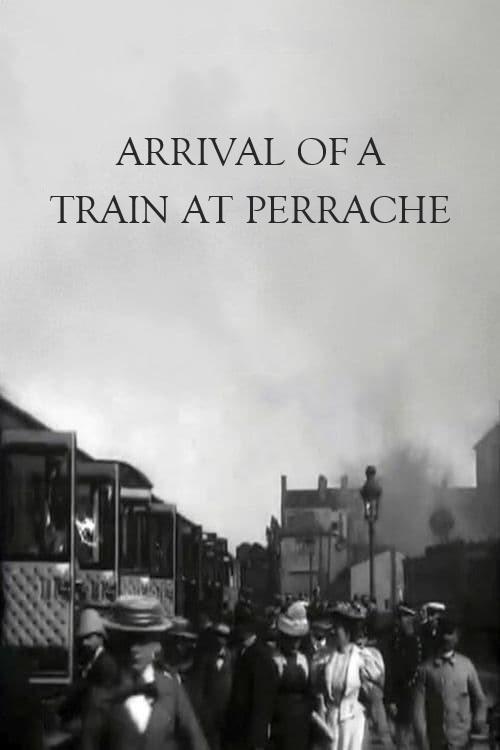
Arrival of a Train at Perrache
1896
No user ratings available yet
Representation score: 3.3 out of 10

Representation Score
Minimal
1896
Director
Louis Lumière
Runtime
1 minutes
Average Rating
No ratings yetNew Showbiz Analysis
This film serves as a historical record of technological advancements in the late 19th century. Since it lacks a scripted narrative, it does not provide intentional character development or thematic subversion. The depiction reflects the social and demographic realities of 1896 Lyon. The subjects are incidental participants in a moment of industrial progress, leading to a uniform portrayal of the era's public. Ultimately, the film's emphasis on the efficiency of railways and the expansion of Western infrastructure prevents any exploration of diverse identities or social critiques.
Category Breakdown
The film does not show any evidence of LGBTQ identities or non-binary gender expressions. It focuses solely on a public transit setting.
Women are shown in the crowd, adhering to the traditional social norms and clothing of the late 19th century. The film upholds conventional gender roles without challenging them.
The crowd at the station is predominantly made up of people with similar backgrounds, reflecting the demographics of 1896 provincial France. There is no indication of a diverse, multi-ethnic cast.
The film highlights the efficiency and modernity of Western railways. It does not address secularism or critique Western institutions.
There is no visible representation of neurodivergence or physical disabilities. The subjects are simply shown as people moving through a transit hub.
Present on Screen
Limited or Absent
Official Synopsis
A train arrives at Perrache station. We see the view from aboard the train.
1896

1900

1897
1900
1896
1898

1895
1898
No reviews yet. Be the first to share your thoughts on this movie!
Use the rating form above to leave a star rating and optional review.