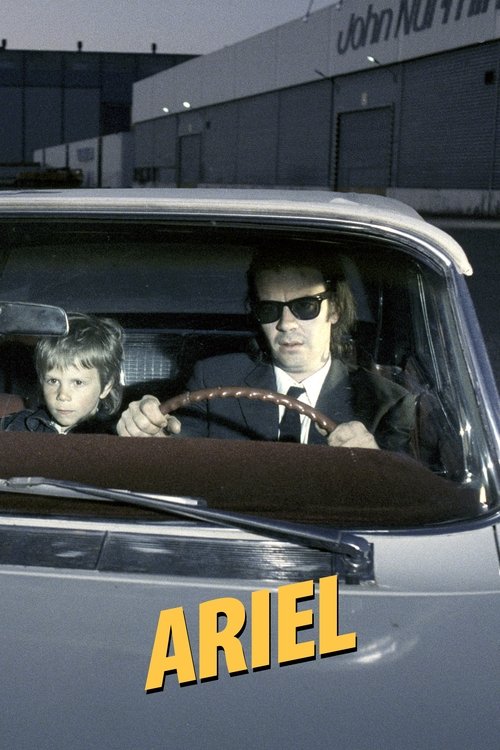
Ariel
1988
No user ratings available yet
Representation score: 5.4 out of 10

Representation Score
Limited
1985
Not RatedDirector
Aki Kaurismäki
Runtime
81 minutes
Average Rating
No ratings yetNew Showbiz Analysis
Aki Kaurismäki’s film serves as a profound social critique through minimalist storytelling. Its key strength lies in challenging Western institutions, particularly capitalism and the meritocratic push for productivity. By focusing on a community of men, it replaces traditional success metrics with a portrayal of aimless, communal life. However, this critique comes at the expense of demographic breadth. The film features a near-total absence of female characters and lacks racial or ethnic diversity, reflecting a very specific, homogeneous Finnish working-class setting. This narrow focus, while insightful for its study of alienation, limits the film's inclusivity. Ultimately, the film is a postmodern examination of the working class. It succeeds in dismantling social hierarchies and traditional domesticity, albeit through a narrow, male-centric lens that lacks explicit representation of diverse identities.
Category Breakdown
The film explores unconventional male friendships that challenge traditional heterosexual norms. Though it doesn't show same-sex intimacy explicitly, the subtext offers a nuanced look at gendered connections.
The story focuses almost entirely on male characters, omitting traditional gender hierarchies. Female characters are nearly absent, creating a heavily male-centric world.
The setting and casting depict a highly homogeneous Finnish working-class environment. There is no indication of racial or ethnic diversity within this localized context.
The film excels in critiquing capitalist systems, showing unemployment as a systemic issue. It challenges Western values by emphasizing communal living over individual success.
There is no significant focus on visible or invisible disabilities within the narrative.
Present on Screen
Limited or Absent
Official Synopsis
A group of men all called Frank—except for one named Pekka—have had enough of life in their working-class neighborhood, so they set off for a better existence in the magical seaside district of Eira. But the way is long, and the group face many hurdles including stray dogs and defunct streetlights.
1988
1971
2004

1990

1996

1984

1986

1993
No reviews yet. Be the first to share your thoughts on this movie!
Use the rating form above to leave a star rating and optional review.