Romamor
1992
No user ratings available yet
Representation score: 3.8 out of 10
Representation Score
Fair
2001
12Director
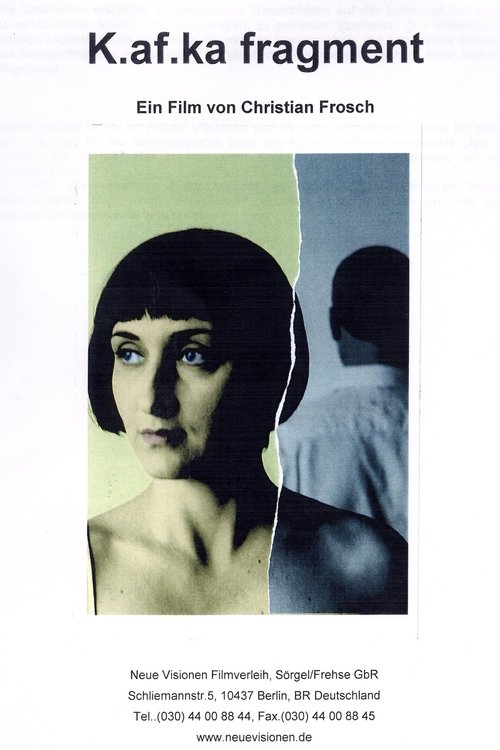
Christian Frosch
Runtime
85 minutes
Average Rating
No ratings yetNew Showbiz Analysis
K.aF.ka - Fragment is a historical study that prioritizes psychological complexity over contemporary identity politics. It employs an experimental structure to dismantle romantic archetypes through Kafka's private letters. The film successfully gives Felice Bauer a prominent role but remains confined by its historical and geographic context. The absence of demographic diversity reflects the period rather than an active challenge to social hierarchies. Ultimately, the work is an intellectual exploration that disrupts narrative conventions without addressing broader social issues.
Category Breakdown
The film focuses on the heterosexual relationship between Franz Kafka and Felice Bauer. It delves into Kafka's internal struggles and unstable desires but doesn't include clear non-cisgender subtext.
Felice Bauer is given a prominent role through her written correspondence, presenting her as a multifaceted character rather than a passive muse.
The setting mirrors the demographic uniformity of early 20th-century Central Europe. There is no indication of intentional diversity or casting actors of different backgrounds.
The film emphasizes psychological depth over moralistic views of love. Its experimental, non-linear structure marks a departure from conventional Western storytelling.
There is no documented depiction of physical or neurodivergent disabilities in this work.
Present on Screen
Limited or Absent
Official Synopsis
An experimental study about the love between Franz Kafka and his adored Felice based on their correspondence.
1992
1931

1998

1951
1928
1996
2010
2003
No reviews yet. Be the first to share your thoughts on this movie!
Use the rating form above to leave a star rating and optional review.