
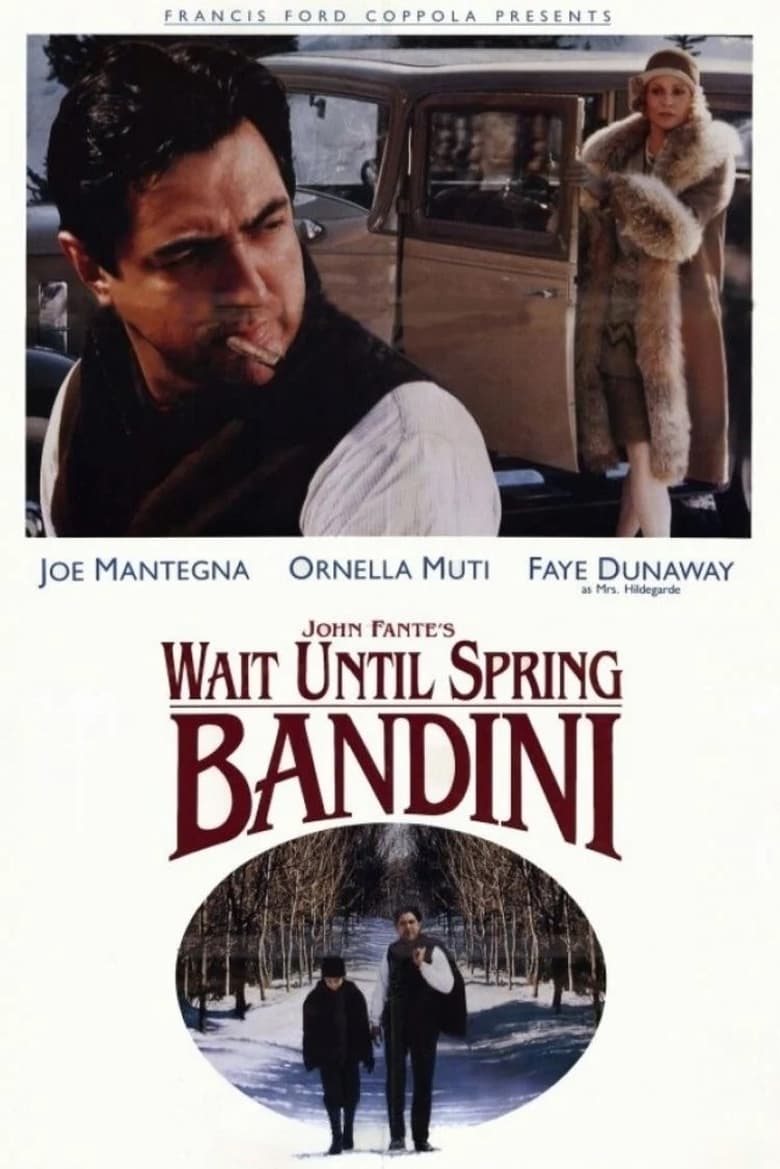
Mi Querido Viejo
1991
No user ratings available yet
Diversity score: 4.3 out of 10
1989
PGDirector
Dominique Deruddere
Runtime
100 minutes
Average Rating
No ratings yetSynopsis
Rocklin Colorado, 1925. A hard cold winter. Young Arturo Bandini loves his father Svevo, his mother Maria and his brothers. Even though his bricklayer father wastes the little money he has in the Imperial Poolhall and his time with the rich American widow, Hildegarde. Even though his beautiful and pious mother lets his father get away with that, even if his little brother wets the bed. Arturo loves them all. He also loves to play baseball, even though he has to wait until spring. And he also loves the movies ... and Rosa. But she doesn't love him ...
Overall Score
Fair
Category Breakdown
LGBTQ+ Representation
The film lacks LGBTQ+ characters or themes. Romantic arcs focus entirely on traditional heterosexual dynamics, such as Arturo's unrequited feelings for Rosa.
Gender Representation
The narrative follows a traditional domestic hierarchy. While Maria acts as a stabilizing force, female agency is largely defined by enduring hardship and relationships to men.
Racial & Ethnic Diversity
The film offers a nuanced look at the Italian-American immigrant experience. It disrupts Anglo-Saxon hegemony by centering an ethnic minority family's struggle for social integration.
Religious & Cultural Diversity
The story critiques systemic economic instability through a working-class immigrant lens. It explores how socioeconomic desperation and capitalist failures impact traditional family ideals.
Disability Representation
There are no prominent depictions of physical or neurodivergent disabilities. No such traits serve as central character arcs or plot drivers.
Strengths
Areas for Improvement
AI Analysis
Wait Until Spring, Bandini is a period drama that finds its strength in the specificities of the Italian-American immigrant experience. By focusing on the Bandini family, the film provides a meaningful counter-narrative to the monolithic Anglo-Saxon depictions often found in early 20th-century American stories. However, the film is limited by its adherence to the conventional social structures of its era. It lacks modern intersectional representation, specifically regarding LGBTQ+ identities and neurodivergent characters, which keeps the diversity score modest. Ultimately, the film succeeds as a study of class and ethnic identity. It uses the friction between immigrant life and the American Dream to highlight how economic instability can corrode the domestic unit.
1991
1950
1998
1958

2008
2019
1993
1949

2007

1984

1999
1989
No reviews yet. Be the first to share your thoughts on this movie!
Use the rating form above to leave a star rating and optional review.