Things
1995
No user ratings available yet
Representation score: 8.1 out of 10
Representation Score
Fair
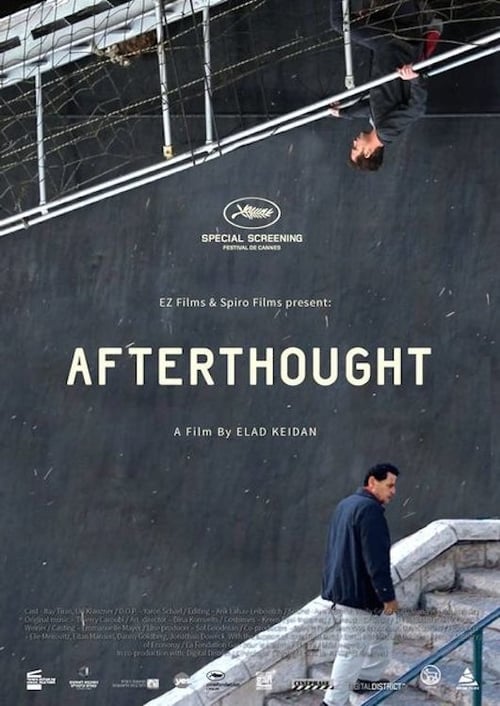
2015
Director
Elad Keidan
Runtime
105 minutes
Average Rating
No ratings yetNew Showbiz Analysis
Afterthought is a character-driven existential comedy that prioritizes psychological depth over demographic breadth. The film's strength lies in its deconstruction of the 'stable citizen' cliché through characters who are crumbling or drifting. However, the narrative architecture is heavily centered on masculine experiences, leaving little room for women's ability to drive the story or explicit multi-layered identities. The setting of Haifa provides a diverse backdrop, but the character focus remains narrow. Ultimately, the film offers a nuanced look at human fragmentation rather than a broad spectrum of social representation.
Category Breakdown
The film focuses on the existential drift of two male protagonists. While themes of alienation are present, there is no explicit mention of LGBTQ+ identities.
The narrative centers on a male-dominated struggle involving Moshe and Uri. There is no women's ability to drive the story in the primary character conflicts.
Set in the diverse Mediterranean port of Haifa, the film utilizes its setting as a character. However, specific character ethnicities remain unconfirmed.
The story disrupts traditional heroic narratives by focusing on psychological collapse and social fragmentation. It explores subjective morality over conventional civic duty.
The narrative provides no evidence regarding the portrayal of physical or neurodivergent disabilities.
Present on Screen
Limited or Absent
Official Synopsis
Haifa on a sunny day. Moshe is a crumbling man walking up the Carmel Mountain on yet another work day. Will this day mark his collapse? Uri walks down the mountain to board a ship and leave behind all the things he loves and despises. His sense of belonging is losing ground. He is likely to miss his military reserve service-call, thus risking jail. Will the two collide or pass through one another? An existential comedy, where the overbearing mountain with its endless stairs takes control over destinies in this unique panorama of the Mediterranean port city.
1995
2019
2020

2017
2017
2013
2010

2015
No reviews yet. Be the first to share your thoughts on this movie!
Use the rating form above to leave a star rating and optional review.