Obsession
1943
No user ratings available yet
Representation score: 4.7 out of 10
Representation Score
Good
1975
Director
Noboru Tanaka
Runtime
76 minutes
Average Rating
No ratings yetNew Showbiz Analysis
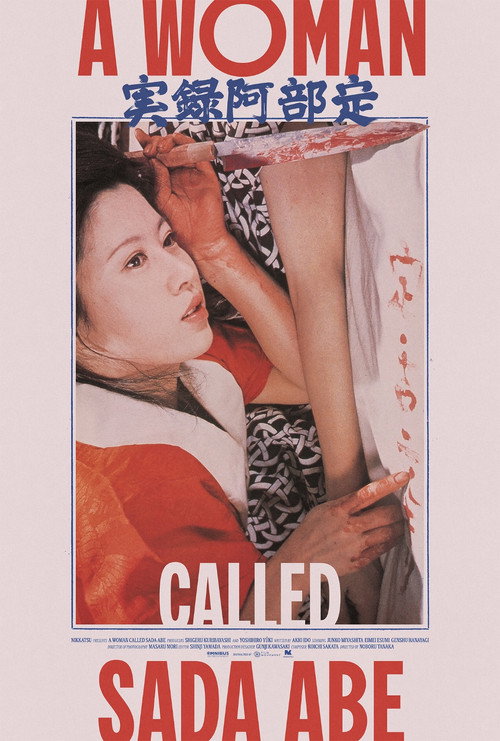
A Woman Called Sada Abe is a compelling exploration of obsession and transgression that challenges conventional social norms. It stands out in its portrayal of a strong female lead who actively pursues her desires, disrupting traditional gender roles. However, the film lacks diversity in its representation of LGBTQ+ identities and does not delve into disability experiences. While historically accurate, the narrative remains centered on a singular heterosexual romance. Overall, the film's strength lies in its refusal to offer a simplistic moral lesson, instead delving into the psychological complexity of its characters through a highly stylized, culturally specific lens.
Category Breakdown
The film focuses entirely on a heterosexual romantic relationship and does not include any explicit LGBTQ+ identities or queer-coded subplots. It centers on the bond between the two main characters without exploring diverse sexual orientations.
Sada Abe drives the narrative through her own sexual autonomy and active pursuit of her desires. She is not a passive character but a force that challenges traditional gender roles and expectations.
The film maintains historical accuracy with an entirely Japanese cast, avoiding whitewashing by staying true to the 1930s Japanese setting.
The film explores 'Ero Guro' through a sensory lens rather than moral judgment. It emphasizes subjective truth and aesthetic inevitability over traditional moral frameworks.
The film does not explicitly address physical or neurodivergent disabilities. Psychological instability and obsessive behavior are treated as thematic elements rather than explorations of disability experiences.
Present on Screen
Limited or Absent
Official Synopsis
A true-life tale of a broken woman whose hedonistic tryst with a high-class restaurateur resulted in a horrific crime of passion that littered Tokyo headlines in 1936.
1943
1978
1991

2011

1983
1969
1976
1971
No reviews yet. Be the first to share your thoughts on this movie!
Use the rating form above to leave a star rating and optional review.