
Drei Dirndl in Paris
1981
No user ratings available yet
Representation score: 2.5 out of 10
Representation Score
Fair
1973
XDirector
Wolfgang Bellenbaum
Runtime
89 minutes
Average Rating
No ratings yetNew Showbiz Analysis
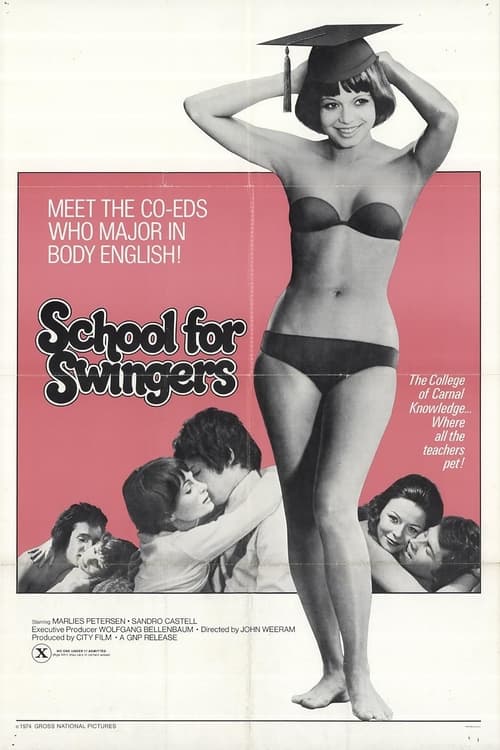
School for Swingers operates as a pseudo-documentary that prioritizes social dynamics and interpersonal intimacy over traditional heroism. Its strength lies in its departure from mainstream moral storytelling, using a voyeuristic lens to explore human behavior through a secular, individualistic framework. However, the film appears limited by the demographic and social constraints of its 1973 West German production context. It lacks explicit multi-layered complexity and documented evidence of diverse racial or queer representation. Ultimately, the work functions as a piece of era-specific avant-garde cinema, offering cultural relativism while remaining tethered to the homogeneity of its time.
Category Breakdown
The film may depict various sexualities typical of 1970s European adult cinema, but there is no clear indication of intentional queer representation or specific non-straight identities.
The dance school setting challenges traditional masculine dominance through themes of grace and physical vulnerability, potentially subverting rigid gender hierarchies common in the era.
The production likely mirrors the demographic homogeneity of 1973 West German cinema, with no evidence of diverse casting to suggest a departure from the era's social constraints.
The pseudo-documentary style promotes secularism and individualistic morality, avoiding singular moralizing by focusing on personal pleasure rather than communal or religious duties.
The film contains no documented evidence regarding the inclusion of characters with physical or neurodivergent disabilities.
Present on Screen
Limited or Absent
Official Synopsis
A pseudo-documentary story about what happens behind dance school walls.
1981

1931
1974

1972
1978

1984

1976

1982
No reviews yet. Be the first to share your thoughts on this movie!
Use the rating form above to leave a star rating and optional review.