Kurosawa
2000
No user ratings available yet
Representation score: 3.8 out of 10
Representation Score
Limited
2006
Director
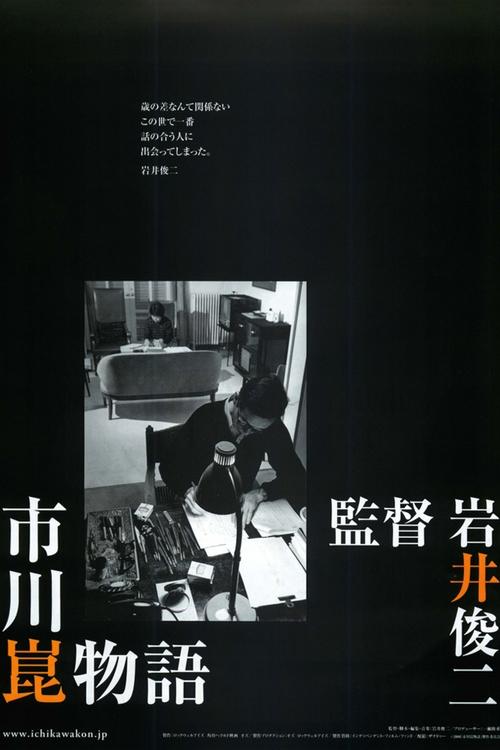
Shunji Iwai
Runtime
83 minutes
Average Rating
No ratings yetNew Showbiz Analysis
Shunji Iwai’s documentary serves as a vital cultural archive that celebrates a significant Asian creative legacy. By centering Kon Ichikawa, the film disrupts the dominance of Western film canons and provides essential visibility into Japanese cinematic history. However, the film's scope is inherently limited by its biographical format, which tracks the life of a single male icon. Because of this focus, the narrative architecture is constrained by the historical era and the professional focus of the subject. Ultimately, the work functions more as a specialized historical retrospective than a tool for addressing broader diversity metrics.
Category Breakdown
The documentary focuses on the professional milestones of a male director. There is no explicit evidence of queer narratives or the exploration of non-traditional gender identities.
The narrative centers on a male auteur within a traditionally male-dominated industry. While Ichikawa's female characters may be discussed, the biographical structure remains male-centric.
The film offers deep visibility into Japanese cinematic history, challenging Western-centric film studies. However, it operates within a culturally homogeneous framework lacking diverse ethnic blending.
This work preserves Japanese cultural heritage by centering a non-Western cinematic master. It lacks specific critiques of religion, capitalism, or traditional institutions.
There is no information regarding the depiction of physical or neurodivergent disabilities in this biographical study.
Present on Screen
Limited or Absent
Official Synopsis
The life of iconic Japanese director Kon Ichikawa.
2000

1985
1999

2008
2016

1953

1994

2004
No reviews yet. Be the first to share your thoughts on this movie!
Use the rating form above to leave a star rating and optional review.