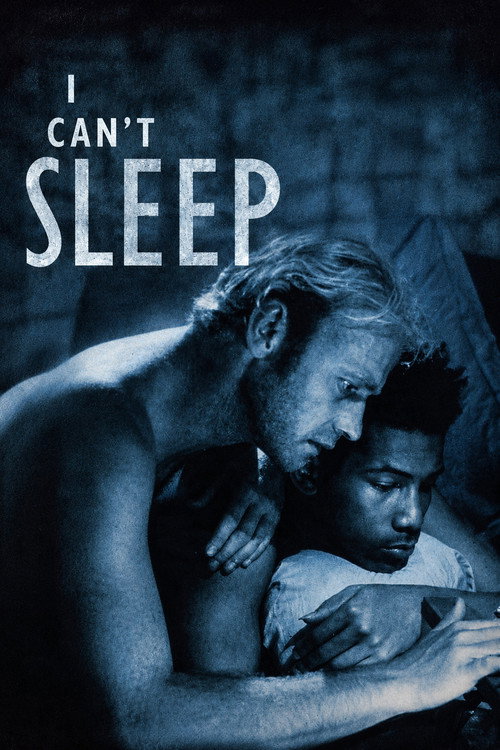
I Can't Sleep
1994
No user ratings available yet
Diversity score: 5.4 out of 10
No Poster Available
2003
Director
Xavier Brillat, Pierre Trividic, Patrick Mario Bernard
Runtime
94 minutes
Average Rating
No ratings yetSynopsis
René is an artist. His studio is set up in a former nightclub that is now closed down. He lives and works there with his friend. All goes well, and yet not as well as all that. René believes he’s caught something. He doesn’t really feel sick, but he’s doesn’t feel absorbed by the world around him. Why do things that enter his mind no longer want to leave it? One of them is this photo of two strange clowns that he cut out of a magazine.
Overall Score
Fair
Category Breakdown
LGBTQ+ Representation
The film explores alienation and psychological detachment rather than explicit identity-based narratives. While the nightclub setting suggests non-traditional social spaces, there is no confirmation of queer agency or specific romantic pairings.
Gender Representation
The story centers on the internal psyche of René, an artist. It avoids traditional family hierarchies but lacks evidence regarding how female characters are utilized or how masculinity is subverted.
Racial & Ethnic Diversity
The narrative appears to be a localized, character-centric drama. There is no indication of a multi-ethnic cast or intentional use of intersectional casting within this singular artist's psychological study.
Religious & Cultural Diversity
The film disrupts traditional Western values of productivity by focusing on an artist's isolation. It aligns with a secular, individualistic framework that prioritizes subjective experience over social integration.
Disability Representation
René exhibits symptoms of psychological dissociation and intrusive thoughts. The narrative approaches mental health through his subjective perception, though it risks leaning into the 'tortured artist' trope.
Strengths
Areas for Improvement
AI Analysis
Ballroom is an existentialist character study that prioritizes psychological fragmentation over demographic representation. It succeeds in challenging normative reality through its focus on a protagonist's internal, disconnected state. However, the film lacks explicit intersectional markers. While it subverts social cohesion, it does not provide clear evidence of diverse racial, gendered, or queer identities. Ultimately, the film's value lies in its atmospheric, auteur-driven storytelling rather than overt social or identity-based politics.
1994

2022

2011

2011

2000
2000

2007

2005

2003

2013

2019

2015
No reviews yet. Be the first to share your thoughts on this movie!
Use the rating form above to leave a star rating and optional review.