Most Likely to Succeed
2019
No user ratings available yet
Representation score: 8.8 out of 10
Representation Score
Good
2013
TV-PGDirector
Joe Brewster, Michèle Stephenson
Runtime
135 minutes
Average Rating
No ratings yetNew Showbiz Analysis
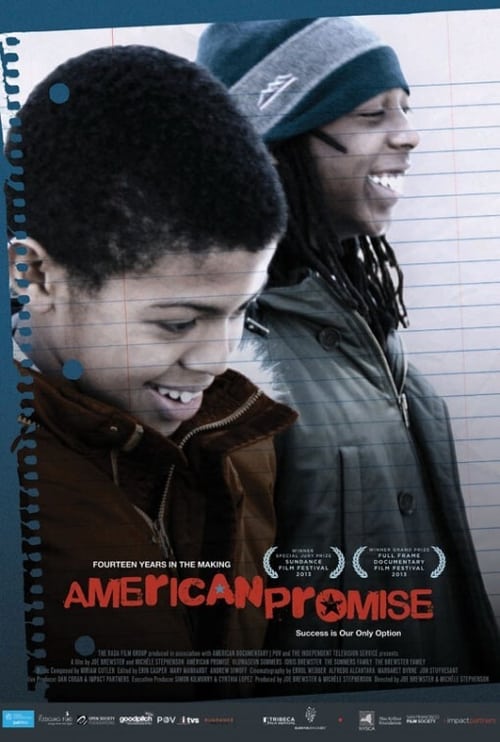
American Promise is a sophisticated longitudinal study that challenges conventional narratives of social mobility. By following two Black children through different educational systems, the film provides a profound critique of how race and class function as barriers to opportunity. The documentary excels in its racial and cultural depth, offering a nuanced look at systemic inequities. It avoids simplified versions of the American Dream, opting instead for a complex exploration of identity and institutional impact. While the film is a landmark for racial representation, it offers less engagement with LGBTQ+ identities or disability-specific narratives, focusing its lens primarily on the intersection of race and class.
Category Breakdown
The film centers on race and socioeconomic class rather than LGBTQ+ identities. While it avoids assuming everyone is straight or cisgender, it doesn't actively challenge gender identity norms.
The documentary avoids traditional gender clichés by focusing on the experiences of Black families. It explores how race and gender intersect within American institutions without explicitly challenging gender hierarchies.
The film is built entirely around the Black experience, providing high ability to act to its subjects. It uses the divergent paths of two Black children to critique racial stratification and dismantle monolithic views.
The narrative critiques Western institutional structures and the accessibility of the American Dream. It frames institutional racism as a systemic issue rather than an individual one.
There is no significant focus on visible or invisible disabilities within the documentary's narrative.
Present on Screen
Limited or Absent
Official Synopsis
In 1999, filmmakers Joe Brewster and Michèle Stephenson turned the camera on themselves and began filming their five-year-old son, Idris, and his best friend, Seun, as they started kindergarten at the prestigious Dalton School just as the private institution was committing to diversify its student body. Their cameras continued to follow both families for another 12 years as the paths of the two boys diverged—one continued private school while the other pursued a very different route through the public education system.
2019
2002
2016
2020
2012
2010
2017
2018
No reviews yet. Be the first to share your thoughts on this movie!
Use the rating form above to leave a star rating and optional review.