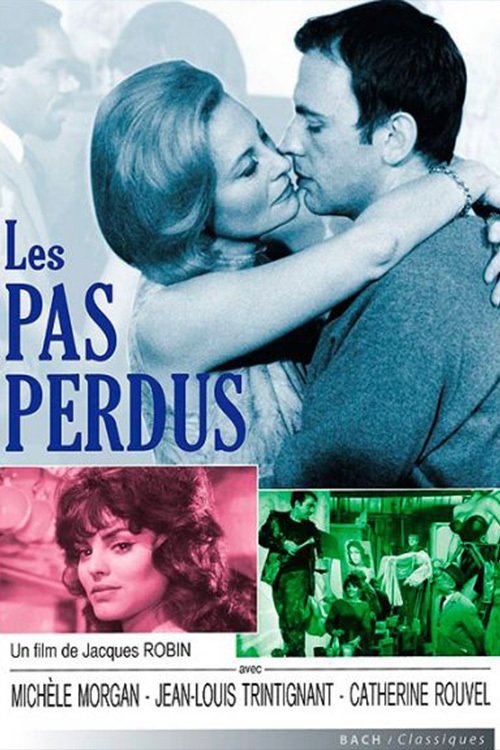
The Last Steps
1964
No user ratings available yet
Representation score: 4.1 out of 10

Representation Score
Limited
1965
Director
Guy Gilles
Runtime
73 minutes
Average Rating
No ratings yetNew Showbiz Analysis
Guy Gilles's film uses a poetic, melancholic style to explore the fleeting nature of human connections. While it employs sophisticated cinematic techniques to examine memory and distance, the narrative remains rooted in the social hierarchies of 1960s France. The story relies on traditional romantic clichés and a homogeneous social setting. It lacks the complexity and systemic critique found in more subversive works, focusing instead on the subjective experiences of two lovers. Ultimately, the film serves as a period-specific romantic drama. It prioritizes the internal lives of its protagonists through a stylized lens rather than challenging the era's conventional gender and racial norms.
Category Breakdown
The film focuses on a traditional romantic relationship between a Parisian woman and a sailor. There is no indication of queer subtext or non-cisgender identities among the main characters.
Gender roles in the film follow a traditional pattern. The male character is active socially, while the female character is defined by her emotional endurance and waiting.
The story takes place in a homogeneous social environment in Paris and Brest. There is no indication of a diverse cast or the blending of different racial identities.
The film explores nostalgia and memory through a contrast of color and sepia tones. It aligns with traditional Western romantic themes without critiquing social institutions.
There is no evidence to suggest that disability or neurodivergence plays a role in the characters or plot development.
Present on Screen
Limited or Absent
Official Synopsis
During her holiday in Brest, a young Parisian falls in love with a sailor. But autumn comes and the two lovers have to part. They write to each other. Will their love resist at a distance, each living his life, him in Brest with his friends, she in Paris who keeps waiting for him? An impossible love story and the cross-portrait of two cities, Paris and Brest, between the realism of the color images and the poetry infused by the sepia black and white images, lives to the rhythm of the nostalgia of the two lovers...
1964
1938
1968
1971
1969
1939
1962
1955
No reviews yet. Be the first to share your thoughts on this movie!
Use the rating form above to leave a star rating and optional review.