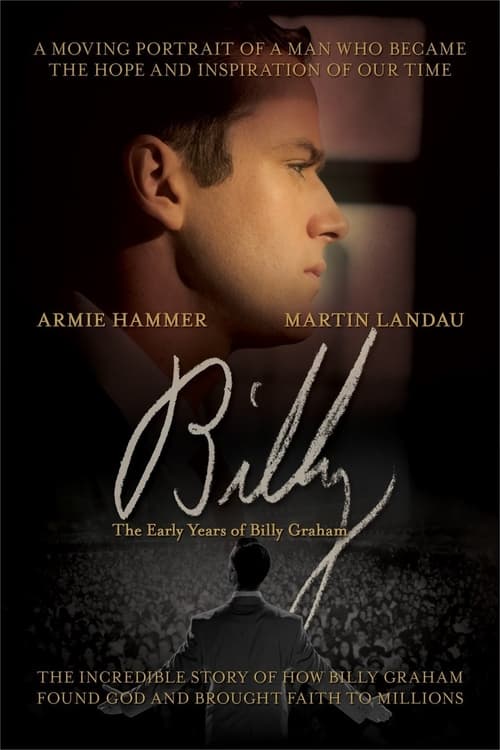
Billy: The Early Years
2008
No user ratings available yet
Representation score: 1.1 out of 10

Representation Score
Limited
2006
PGDirector
Richard Rossi
Runtime
110 minutes
Average Rating
No ratings yetNew Showbiz Analysis
This documentary offers a focused look at a woman breaking through the male-dominated religious landscape of the early 20th century. By highlighting McPherson's ability to command massive audiences, the film successfully challenges historical gender norms. However, the film's reliance on archival footage creates significant limitations regarding diverse representation. The visual record is largely homogeneous, reflecting the era's social constraints and offering little racial or LGBTQ+ diversity. Ultimately, the film is a specialized study of gendered power dynamics rather than a broadly inclusive portrait of society.
Category Breakdown
The film does not include any LGBTQ+ characters or narratives related to queer themes. It focuses solely on the historical biography of McPherson and her religious movement.
The narrative centers on a woman who challenges traditional gender hierarchies. McPherson exercises significant authority in both theology and social matters, disrupting the patriarchal structures of the 1920s.
The representation reflects the social constraints of the era. Archival footage depicts a primarily homogeneous demographic consistent with the early years of the Foursquare Church.
The film examines the intersection of celebrity and religious institutions within Western contexts. It focuses on mass evangelism rather than critiquing the institutions themselves.
There is no evidence of characters or historical figures being portrayed through the lens of physical disability, neurodivergence, or mental health conditions.
Present on Screen
Limited or Absent
Official Synopsis
A feature film about the life of Aimee Semple McPherson, the famed evangelist of the 1920s.
2008

1943
2003

1982

2019
2025

1996

2023
No reviews yet. Be the first to share your thoughts on this movie!
Use the rating form above to leave a star rating and optional review.