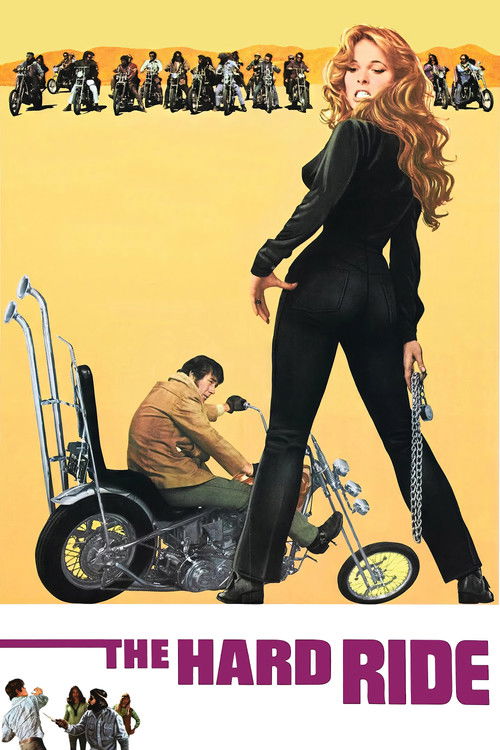
The Hard Ride
1971
No user ratings available yet
Representation score: 0.8 out of 10
Representation Score
Fair
1971
RDirector
Duke Kelly
Runtime
75 minutes
Average Rating
No ratings yetNew Showbiz Analysis
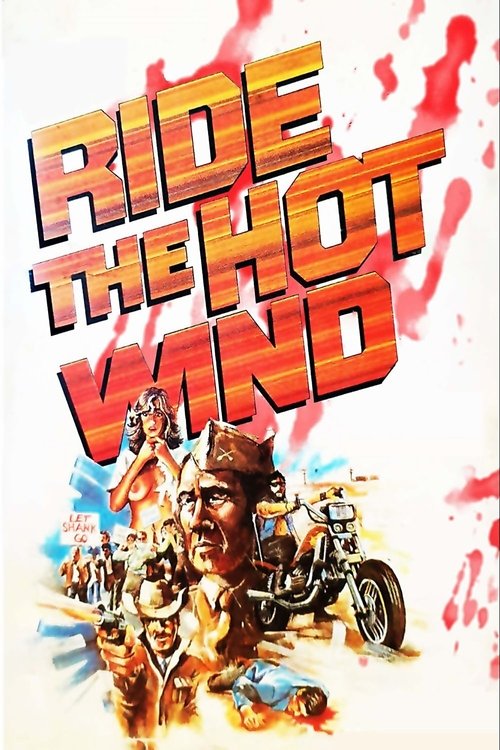
Ride the Hot Wind is a character-driven drama about a disgraced Vietnam veteran. While the film critiques military and state institutions, it remains rooted in traditional genre clichés from the early 1970s. The narrative focuses almost entirely on the male experience of post-war trauma and social dismissal. The cast and social environment appear largely homogeneous, with little representation of diverse racial or LGBTQ+ identities. Ultimately, the film's strength lies in its challenge to institutional authority rather than its portrayal of diverse identities. It functions as a gritty, traditional drama of a man struggling against his own reputation.
Category Breakdown
The film does not include visible LGBTQ+ identities or same-sex intimacy. It focuses on traditional masculine roles and the social readjustment of a veteran.
The story centers on a male protagonist and his struggles with masculinity. Female characters play supporting roles within the male protagonist's journey.
The film seems to take place in a predominantly white setting with no evident actively leading roles for characters of color.
The story questions the moral clarity of military and state institutions. It emphasizes anti-social rebellion and skepticism towards institutional authority over traditional social order.
The protagonist shows signs of psychological trauma from his wartime experiences. However, mental health issues are not explored deeply or as a central theme.
Present on Screen
Limited or Absent
Official Synopsis
Captain Shank is an outcast officer and gets dishonorably discharged. He tries to get back on his feet, but his reputation keeps following him around ruining everything. When he meets some bikers he gets caught up in a life he tries desperately to escape.
1971
1981
1969

1953
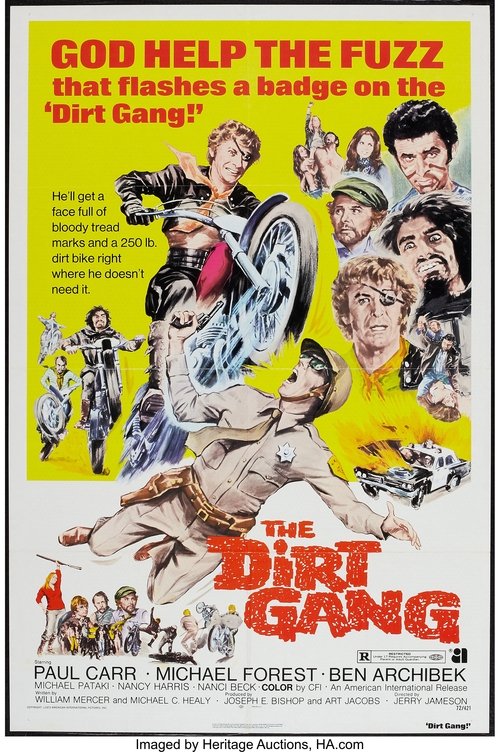
1972
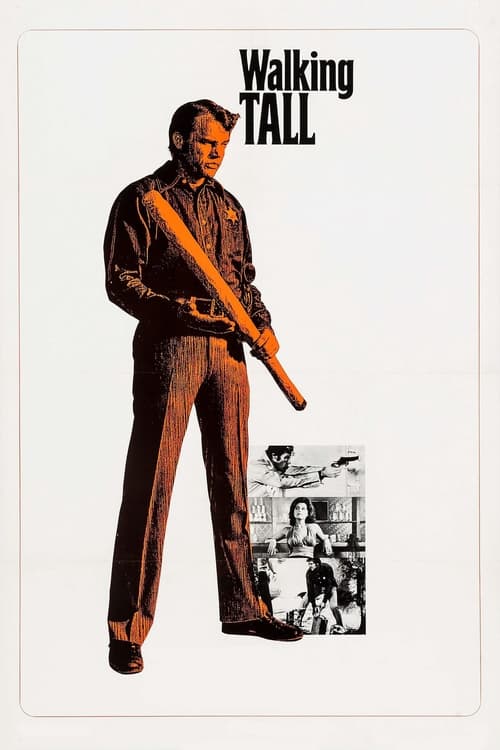
1973
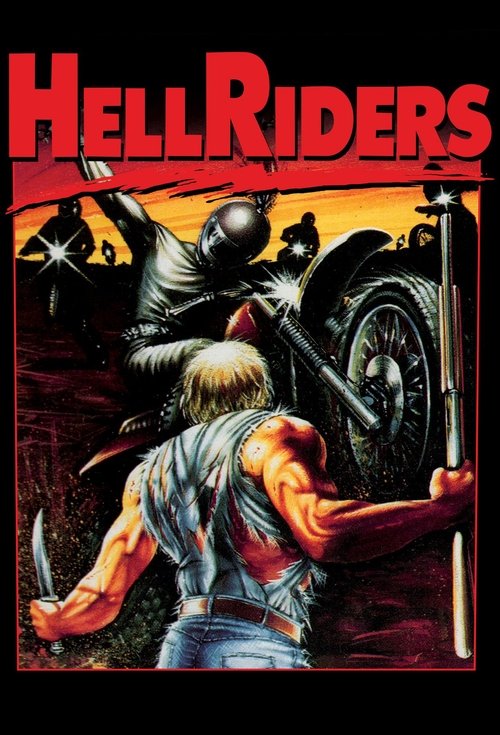
1984
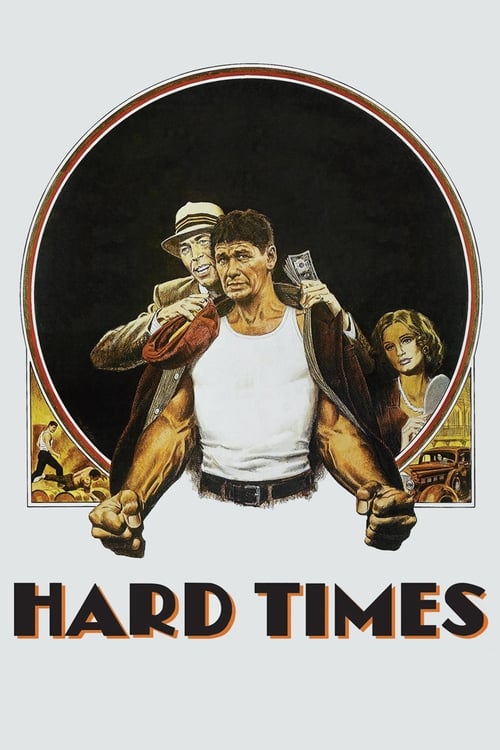
1975
No reviews yet. Be the first to share your thoughts on this movie!
Use the rating form above to leave a star rating and optional review.